
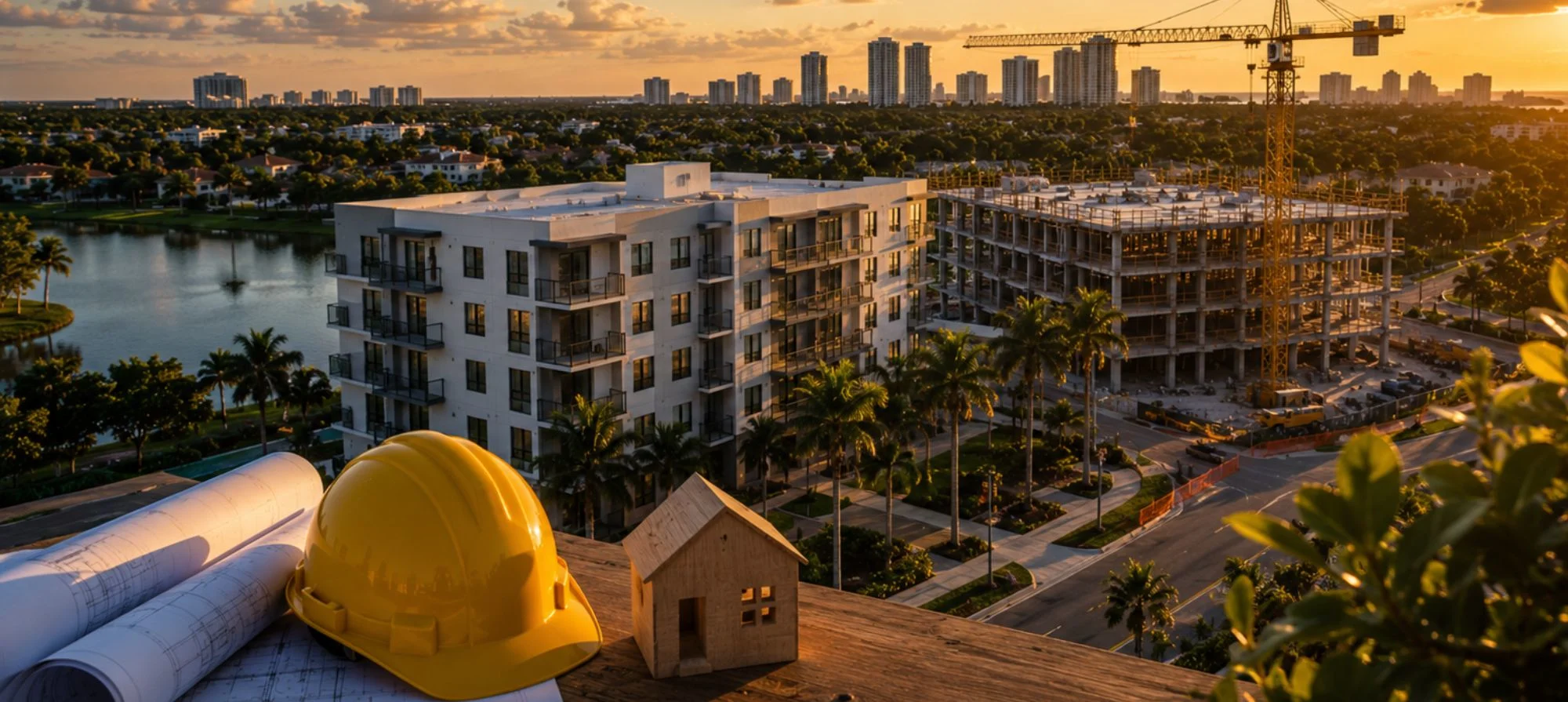
The changes took effect on July 1 and put government-owned land and church land on the table for housing for the first time.
Key Takeaways
- Florida's Governor DeSantis signed the 2026 Live Local Act update, House Bill 1389, which took effect on July 1, 2026.
- The law's by-right zoning now extends to land owned by cities, counties, school districts, and qualifying religious institutions.
- It is the fourth consecutive year Florida has expanded the law since the original 2023 version.
Florida just widened its most powerful housing law again. According to The Real Deal, Gov. Ron DeSantis signed the 2026 update to the Live Local Act, which took effect on July 1, 2026. The vehicle was House Bill 1389, and it passed near-unanimously: 98 to 4 in the House, 35 to 0 in the Senate.
If you are new to it, the Live Local Act is the state's main tool for overriding local zoning to build more affordable and workforce housing. Developers who set aside at least 40% of a project's units as affordable rentals generally qualify for added density, added height, reduced parking, and administrative approval that bypasses local review boards.
We covered the bill's journey through the legislature back in March 2026. Now it is law, and the final version goes further than any previous update.
What does the 2026 Live Local Act update change?
Public land and church land are now in play
The headline change is that Live Local's zoning preemptions now reach public land. Counties, municipalities, and school districts can put their underused parcels (vacant lots, surplus offices, unused school sites) toward affordable and workforce housing without a rezoning, as long as the government co-applies with a private developer.
Religious institutions get a version of the same power. A church, synagogue, or mosque can now build affordable housing on its land if the site is at least three acres, the institution has at least ten years of active worship there, and 40% of the units are affordable.
Lawsuits, guardrails, and a stronger tax break
The update also puts real teeth into an old rule. It amends Florida's Fair Housing Act to make it easier to sue cities that block affordable housing based on a project's financing. And there are guardrails: farms and farm operations, open-space districts, and conservation land are carved out, so the preemptions cannot be used to pave over agricultural or protected land.
The affordable-housing property tax break got stronger: developers now lock it in earlier, at the building-permit stage; cities can no longer opt out unless they prove they already have enough affordable housing; and rental townhome and villa communities qualify, not just apartment towers. Live Local projects may now also go near airport runways and noise zones if the airport's governing body signs off.
Why does Florida keep expanding this law?
The loophole-plugging pattern
This is the fourth straight year the law has grown, and there is a pattern to it. As Larry Mastropieri explained on the Discover South Florida Podcast: "This is the fourth year they've amended and expanded the Live Local Act's ability to execute, aka circumvent local government authority. The local governments don't always love this, but as they see loopholes and the local governments take advantage of them, the following year the Live Local Act is amended to eliminate that loophole."
Each year's version closes the gaps cities found in the last one. The financing loophole is this year's example, and the opt-out rules on the tax exemption are another. The direction of travel is unmistakable: Tallahassee keeps strengthening the state's hand, and the near-unanimous votes say both parties are on board.
Why lawmakers keep saying yes
As Larry put it: "Florida in general is growing. The population is increasing by the minute, and more affordable housing is absolutely needed. And so we need to figure out a way to solve this one way or another. And this is one way of doing it."
How is South Florida already using the Live Local Act?
Affiliated Development used Live Local for The Pierce and The Dune in Boynton Beach, and Kolter is using it for the 386-unit Alton project in Delray Beach. Projects like Seacrest Sound in Boynton Beach show the workforce-housing version of the same playbook.
The public-land provision could be the biggest unlock for South Florida yet. Palm Beach and Broward counties, their cities, and their school districts all sit on surplus parcels, and those can now go toward housing under the same fast-track treatment. At the larger end, developers are eyeing sites like the Galleria Mall area in Fort Lauderdale, where Live Local could help push thousands of units into a compact area.
Trying to figure out how a Live Local project near you could affect your property's value or your next investment? Talk to a real estate agent in Boca Raton who follows these projects from application to opening. Reach out to The Mastropieri Group or call (561) 544-7000.
What do supporters, critics, and investors see?
The pushback usually comes from residents, not politicians. Density is rising fast in some neighborhoods, and people who bought into quiet, low-rise areas do not always want the traffic that comes with hundreds of new units next door. Watchdogs such as Florida TaxWatch have also argued that earlier versions did too little for missing-middle renters, households that earn too much for subsidies but cannot comfortably pay market rent.
Larry's read comes from the investor side, because he owns small rental buildings near where these big projects land. His experience: when a high-density Live Local project with ground-floor retail goes up next to a 1960s-vintage 10 or 20-unit building, the older property suddenly sits in a walkable pocket. The small landlord can renovate, rent at a discount to the new building's "affordable" rents, and the tenants get the coffee shop a block away. New construction done right tends to improve the community, lift values, and add tax base the city can put back into infrastructure.
Watch More on This Topic: Watch this segment | Full Episode | Watch Last week's recap
Frequently Asked Questions
What is the Live Local Act?
It is Florida's main tool for overriding local zoning to build more affordable housing. Developers who make at least 40% of a project's units affordable rentals can qualify for added density, added height, reduced parking, and administrative approval that bypasses local review boards.
What land does the 2026 Live Local update open up?
Land owned by counties, municipalities, and school districts, as long as the government co-applies with a private developer, plus land owned by religious institutions with at least three acres and ten years of active worship. Farms, open-space districts, and conservation land are excluded.
When did the 2026 Live Local changes take effect?
July 1, 2026. Gov. DeSantis signed House Bill 1389 in June 2026 after it passed the House 98-4 and the Senate 35-0. It is the fourth consecutive year Florida has expanded the law since 2023.
Can cities still block Live Local projects?
Their room to say no keeps shrinking. Qualifying projects receive administrative approval that bypasses local boards, and the 2026 update makes it easier to sue cities that reject affordable housing based on its financing.
Does the Live Local Act apply to condos for sale?
The core entitlements are intended for rental projects, with at least 40% of units designated as affordable rentals. The 2026 update did broaden the property tax break to rental townhome and villa communities, but for-sale product is not the law's focus.
Local help for buyers and investors in South Florida
If you are buying, selling, or investing in South Florida, it helps to work with a team that tracks how laws like Live Local reshape neighborhoods and values. Reach out to The Mastropieri Group Realtors® for practical, hands-on support across the region. Call us at (561) 544-7000. You can also browse current homes for sale in Boca Raton.
Posted by Larry Mastropieri





Enjoy this blog post? Click here to subscribe for updates

Leave A Comment