
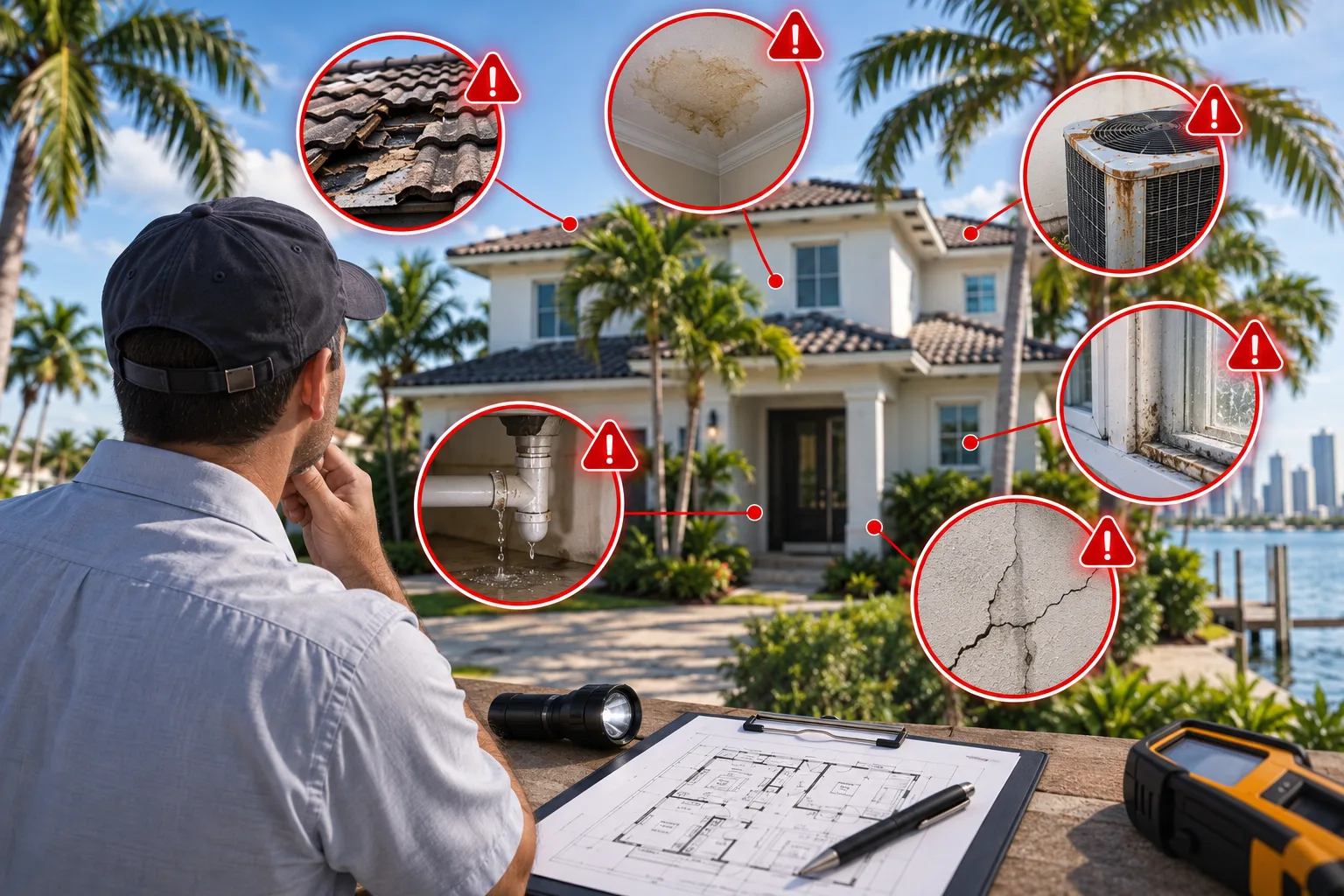
Never waive before your insurance quote arrives, since that number can move by thousands. Cast iron drain lines fail at 25 to 30 years in Florida heat. Polybutylene supply lines block coverage entirely, and outdated panels can make a home uninsurable. Scope the sewer on anything built before 1985, then trade your remaining contingency for a credit.
Your Inspection Period Is a Free Option
The mechanics matter before the checklist does, and Larry describes what this window actually gives you. On the Discover South Florida Podcast, Larry Mastropieri framed it in terms buyers rarely hear.
"The buyer basically gets this free option to buy the property. That's how I describe it. It's a free option because the buyer can exit for no reason at all in this contract."
Nothing about your findings changes that right.
"Whether they find stuff, don't find stuff, doesn't matter. They can send us a cancellation during that seven-day window, and it's pretty clear cut. They can exit and get their deposit back."
Practice has settled on a fairly narrow range.
"Most people put seven, usually no more than 10, usually no less than five. Seven is kind of the fair window."
Never Waive Before the Insurance Quote Arrives
The single most valuable point in this discussion has nothing to do with the physical inspection. Larry calls it out as an industry-wide failure.
"If you haven't gotten your insurance quotes back and you're in the inspection period and you're a standard buyer, you shouldn't probably waive your inspection period contingency."
He is blunt about who drops the ball.
"These are things that most realtors forget. They forget to get you your insurance quote."
The stakes explain his insistence.
"You can get insurance for 30 grand on a property, and you're still going to be required to close this thing after the inspection period. So you're not going to be happy about it."
A premium arriving after your contingency expires becomes your problem permanently. Buyers across Palm Beach County have discovered that a home passing every physical inspection can still carry an unaffordable payment.
The Toenail Example
Larry offers a specific case showing how inspection findings and insurance pricing connect.
"Hey, by the way, there's toenails attached to the roof instead of double wraps. And so the insurance price went from 6K to 10K. I'm going to negotiate that."
His posture on that negotiation is worth borrowing.
"I'm going to go hit them with that. I'm just going to give them a hard time and see what shakes out. They may say absolutely not, this is what it is. That's fine, but I'm going to go try."
Put the Carrier's Reasoning in Writing
Documentation converts a complaint into leverage, and Larry describes exactly how he builds it.
"I get the insurance vendor saying, hey, normally it's six, you're paying 10 because of this thing that we found during inspection. And I get that email from them, and I forward it straight to the agent and say, hey, this house isn't what we thought it would be."
A third-party email carries weight that a buyer's opinion never will. Agents working West Palm Beach deals use that document to reopen a settled price.
Under contract with your inspection clock already running? Talk to a real estate agent near Boca Raton who gets insurance quotes back before your contingency expires, not after. Reach out to The Mastropieri Group or call (561) 544-7000.
How Long Do Cast Iron Pipes Last Here?
Age determines the odds here, and Larry maps it to a specific market segment.
"If we're buying a million-dollar property in East Boca Raton, in most cases it's a 1970s product. And so in most cases they have cast iron drain lines, unless they were replaced."
His response never varies.
"Do you have cast iron drain lines? If you have cast iron drain lines, then we should scope them."
Florida conditions accelerate the failure curve considerably. Cast iron carries a 40 to 60 year lifespan nationally. Humidity, heat, and sewer gas chemistry cut the realistic life here to roughly 25 to 30 years. Many carriers now require a sewer camera inspection on homes built before 1975.
Owners across Delray Beach and Boca Raton face this on nearly every mid-century home. Remedies split two ways, and Larry has run both repeatedly.
"The solution to cast iron issues is, do we line it or do we replace it? I've done it every which way probably a hundred times each."
Scope the PVC Lines Too
Newer plumbing deserves a look for different reasons.
"In some cases we even scope the PVC drain lines, just because we're curious if maybe there's roots growing in it, or maybe there's what they call bellies in the PVC."
A camera reveals root intrusion, offset joints, and low sections holding water, none of which a visual check catches. Treat a sewer scope as standard on any home predating 1985.
Polybutylene Ends the Conversation
Certain findings function as hard stops instead of negotiating points. Polybutylene supply lines, installed roughly between 1978 and 1995, appear as gray or blue-gray flexible plastic pipe throughout Florida subdivisions.
Chlorinated water degrades the material from the inside, producing micro-fractures that fail without visible warning. Almost no standard Florida homeowners insurer will write a policy on a home with active polybutylene. Many lenders also require replacement before closing on a financed purchase.
Get a plumbing bid before you negotiate anything. A full repipe generally runs $4,000 to $15,000 depending on home size and access. You want that number in hand while your contingency remains alive.
Electrical Panels That Block Coverage
Several panel brands trigger automatic declines with most carriers, and they appear regularly in homes built between the 1960s and 1980s.
- Federal Pacific Stab-Lok panels, widely refused over breaker failure risk.
- Zinsco panels, which carry similar underwriting problems.
- Challenger and Sylvania panels, also commonly rejected.
- Aluminum branch wiring, which requires remediation to satisfy carriers.
- Fuse boxes instead of breakers, which many insurers will not write.
Owners sometimes find coverage elsewhere at a cost. A carrier willing to insure a flagged panel typically prices the policy higher by default. That becomes a permanent premium increase instead of a one-time repair.
The Rest of the South Florida Checklist
- Chinese drywall, imported during the mid-2000s building boom, corroding copper and wiring.
- Open or expired permits, which surface at closing and complicate title.
- Unpermitted additions, enclosures, or electrical work missing from county records.
- Galvanized steel supply lines corroding from the inside and reducing pressure.
- Water heaters older than 15 years, which many carriers now reject.
- Air handlers and condensers beyond 15 to 20 years, since replacement runs near $10,000.
- Roof age against carrier limits, along with the permit proving replacement.
Larry treats the list as a team exercise across several professionals.
"You just need to be on the team with the right inspector, realtor, insurance guy."
How the Waiver Negotiation Actually Works
A waiver works as a bargaining chip instead of a concession, and Larry uses it deliberately.
"Usually the negotiation strategy is give me 50 grand and I will waive the contingency. We're done. No more financing, no more inspection period contingency."
He walks clients through a specific decision framework first.
"We have these items that we know need to be addressed. We want to negotiate for them, but we have these items outstanding that we really don't have clarity on. Are you comfortable waiving the inspection period, assuming we get five grand, 10 grand, 50 grand for these items?"
One client answered honestly, and Larry accepted it immediately.
"He's like, I don't feel good about waiving it yet. I'm like, okay, well then let's get good."
Clarity precedes any waiver. Unanswered questions belong resolved before you surrender the right to walk, and sellers in Broward County generally understand that sequence.
Does a Zero-Day Period Ever Make Sense?
Some buyers skip the window entirely, and Larry does it himself under specific conditions.
"If you're going to do a zero-day inspection period, that depends on your risk tolerance. I've done a ton of them, but I'm a seasoned investor and we kind of understand what we're getting ourselves into."
Experience and reserves make that gamble survivable. A first-time buyer stretching to afford the payment occupies a completely different position. Anyone copying an investor's tactics without their balance sheet ends up exposed, as buyers in Palm Beach Gardens have learned.
Before You Sign the Waiver
- Confirm your written insurance quote and the reason behind the number.
- Scope the sewer line on any home built before 1985.
- Identify supply line material at every accessible connection.
- Photograph the electrical panel label and check the brand.
- Pull county permit records for open or missing permits.
- Get written bids on anything you intend to negotiate.
Contract terms and carrier requirements vary, and this page covers general practice. Your agent, inspector, and insurance broker should confirm what applies to your specific property.
Spend the Week, Keep the Leverage
An inspection period is the only stretch of a transaction where you hold every card. Buyers surrender it by running out of days, not by exhausting their questions. We line up the inspector, the sewer scope, and the insurance quotes inside one week. Whatever comes back becomes leverage before you sign anything away. Reach out to The Mastropieri Group, Realtors®.
Call (561) 544-7000. Tell us the address and the year built, and we will tell you what to check first.