
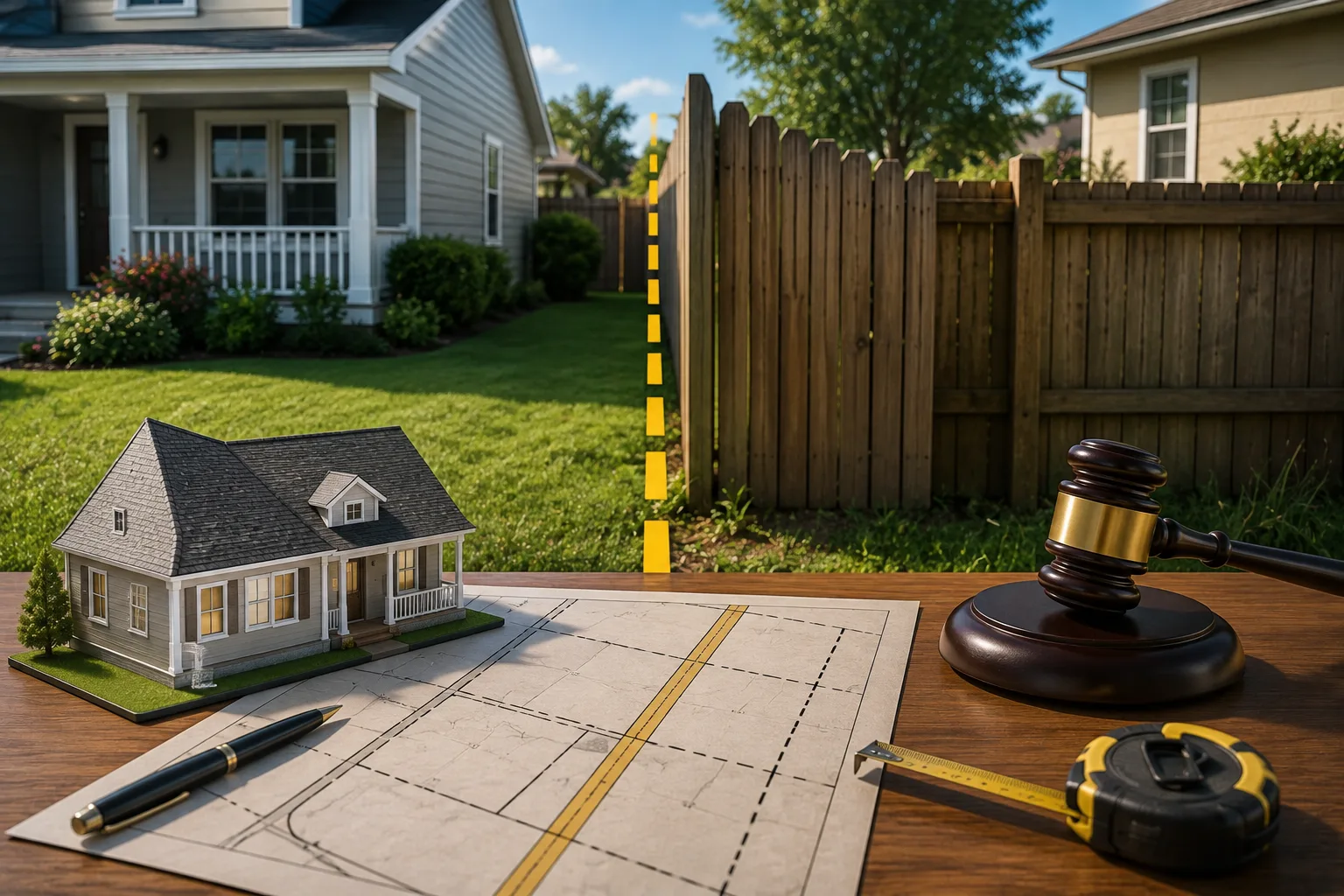
Yes, though your buyer decides how smoothly it goes. The survey will flag the encroachment, and it becomes an exception on the title insurance policy. Minor overlaps rarely trouble anyone, while a fence swallowing several feet of yard can cost you financed buyers entirely. Fix it before listing or expect to negotiate it under deadline pressure.
The Short Answer and the Real Question
Nothing in Florida law prevents the sale, which makes this an easier question than most sellers expect. On the Discover South Florida Podcast, Larry Mastropieri answered without hesitation.
"The answer to that question is yes, you can. You can do that."
The complication arrives immediately afterward, and it involves someone else's tolerance instead of your legal rights.
"The follow-up comment to that is, is a buyer willing to tolerate it? Is a buyer willing to close if your neighbor's fence is on their property? That's the trick."
Your ability to sell was never really in question. Whether a particular buyer proceeds is the variable that actually matters.
The Survey Is Where It Surfaces
Encroachments rarely stay hidden, since nearly every financed purchase involves a new survey. That document maps the legal boundary against what physically sits on the land.
"You're going to see it on the survey. You're going to see what they call an encroachment."
The consequence flows directly from that finding.
"That encroachment can be an exception to the title."
Sellers in Palm Beach County often hear about a fence problem for the first time when a buyer's surveyor flags it. That is a poor moment for a surprise.
What a Title Exception Actually Costs You
Title insurance protects an owner against recorded defects, and an exception carves something out of that protection. A policy listing the fence encroachment simply will not cover any future dispute over that strip of land.
The buyer therefore assumes a risk the policy has expressly declined. Some accept it without concern, particularly on a minor overlap along a side yard. Others treat it as a defect in what the industry calls marketable title, and Larry uses that exact framing.
"Anyone can do that. Will most buyers do that? No. It's not really what they call a marketable title."
Will the Lender Still Fund the Loan?
A mortgage introduces a party with no emotional stake and firm underwriting standards. Larry describes a genuinely mixed picture.
"It'll be an exception on the title insurance policy. The lender in most cases will be cool with it. In not all cases will the lender be cool with it."
Nothing about that uncertainty helps a seller plan.
"You may have no choice but to do this if your buyer is going to finance the property."
A cash buyer sidesteps the issue entirely, which narrows your pool at exactly the moment you want it wide. Owners listing in West Palm Beach should confirm the lender position before pricing the home.
Six Inches Versus Six Feet
Scale drives almost every decision here, and Larry draws the distinction plainly.
"Maybe it's dramatically on your property, maybe it's just like six inches on your property. It just depends."
A fence six inches over a line rarely changes how anyone uses the property, and most buyers shrug at it. A fence enclosing several feet of your side yard removes usable land, affects setbacks, and can complicate a future addition or pool permit. Appraisers and lenders react to the second scenario very differently. Sellers in Delray Beach and Boca Raton feel that gap most on smaller lots.
Does your survey show a fence sitting where it should not? Talk to a real estate agent near Boca Raton who has closed through title exceptions and can tell you which ones actually cost you buyers. Reach out to The Mastropieri Group or call (561) 544-7000.
Fixing It Can Get Messy Fast
A buyer who objects usually puts the burden squarely on the seller, and most contracts back them up.
"If the buyer's not okay with it, they're going to ask you to rectify it, and then you got to rectify it. Usually in these contracts, you have to go do it."
Physical reality complicates what sounds like a simple instruction. Larry offers an example his team has actually lived through.
"I got to cut this tree down in order to do it. It's this oak tree that's been here for freaking 20 decades. And now the roots are going to come out of the ground and pull up the pool next door, and whatever chaos happens."
A fence relocation sometimes means mature landscaping comes out, irrigation gets disturbed, and permits nobody anticipated come into play. A cooperative neighbor keeps it manageable, while an uncooperative one turns a contract requirement into a standoff.
The Legal Risk Most Sellers Never Consider
A long-standing fence carries implications beyond the transaction itself, and this rarely comes up until an attorney reviews the file. Florida recognizes doctrines that can convert a boundary line over time.
Why Most Fence Claims Actually Fail
Adverse possession in Florida requires seven continuous years of open possession, which a decades-old fence easily satisfies. The remaining requirements defeat almost every claim, though.
A neighbor claiming without color of title must pay all property taxes and special liens on the disputed strip. They must also file a return with the county property appraiser identifying that land. Neighbors essentially never complete those steps, which is why the so-called seven-year fence rule is closer to myth than law. The recorded boundary controls unless someone satisfies every element.
Boundary by Acquiescence and Prescriptive Rights
Two related doctrines deserve a mention. Boundary by acquiescence requires genuine uncertainty about the true line plus mutual treatment of the fence as the boundary for more than seven years. Courts have held repeatedly that silence or a simple failure to object falls short, since both owners must have affirmatively accepted the line.
A prescriptive easement runs on a twenty-year clock and grants only a right of use instead of ownership. Neither doctrine transfers land easily, though both give a buyer's attorney something to worry about.
The Written Permission Defense
Owners hold a simple and powerful tool here. Both adverse possession and prescriptive easements require use without the owner's consent. Written permission converts that use into something permissive and stops the clock entirely.
A dated letter granting your neighbor permission to maintain the fence protects your ownership without demanding removal. Record it or at minimum keep a signed copy in your files. Owners across Broward County resolve years of exposure with a single page.
What Resolving It Actually Costs
Sellers weighing whether to fix an encroachment deserve real numbers, and the range is narrower than most people fear. A boundary survey runs a few hundred dollars across most South Florida neighborhoods. That expense earns its keep regardless of what you decide afterward.
Documented solutions cost surprisingly little when a neighbor cooperates. An attorney who drafts and records a boundary line agreement, or a pair of quitclaim deeds, typically charges under two thousand dollars. The recording fees add very little on top. Relocation costs depend on materials and length, though a short run of chain link or wood rarely approaches the deal risk it removes.
Litigation sits in an entirely different category. A quiet title action consumes months and legal fees that routinely exceed the land's value several times over. Attorneys push settlement first for exactly that reason.
Approaching the Neighbor Without Starting a War
How you raise the subject shapes everything that follows, and sellers frequently handle this exact conversation badly. Your neighbor almost certainly did not place that fence maliciously, since most encroachments trace back to a contractor working without a survey years ago.
Lead with the survey instead of an accusation. A copy of the drawing does the arguing for you, and it frames the matter as a documentation problem instead of a character judgment. Offer to cover the paperwork costs as well. A neighbor asked to pay for a mistake they never knew about tends to dig in.
The calendar helps as much as your tone does. A conversation held months before listing carries no urgency, while the same request ten days before closing reads as pressure. Sellers in Broward County who start early almost always land a recorded agreement instead of a standoff.
Ways to Clear an Encroachment
- Ask the neighbor to relocate the fence to the surveyed line at their expense.
- Record a boundary line agreement fixing the line both owners accept.
- Exchange quitclaim deeds conveying that sliver of land to whoever should hold it.
- Grant a recorded easement permitting the fence to remain where it stands.
- Pursue a lot line adjustment through the county when the parcels allow it.
- File a quiet title action when the neighbor refuses every reasonable option.
Cost and timeline separate these options sharply. A cooperative neighbor resolves it within weeks through a recorded document. Litigation stretches across months and consumes far more than the disputed strip is worth.
The Mortgage Trap in a Quitclaim Fix
One detail catches owners off guard when they transfer a sliver of land. Many mortgages contain a clause allowing the lender to demand immediate payment of the full balance if the borrower conveys any interest in the property.
Most lenders never invoke it over a boundary correction, though the risk is real enough to warrant a call before anyone signs a deed. Your attorney should confirm the lender's position in writing first.
Selling Without Clean Title Has a Price
Buyers occasionally offer to skip the title work entirely, and Larry recounted one such conversation. The pitch arrived as a fast closing at a steep discount.
"Somebody came to me the other day, said seven-day close, substantially discounted price."
His questions went straight to what the buyer had actually prepared.
"Have they already started the title work process? Are they going to be able to give clear title and title insurance? And the guy was like, well, that's on you to figure out."
The translation he offered is worth remembering.
"What you're saying to me right now is you need to close in seven days, and you want me to take it with title work but no title insurance policy."
His response captures how these trades really work.
"Okay, I'd consider that at a price."
Speed and certainty trade against each other directly. A seller who accepts a compressed timeline and thin title work should expect a discount. A buyer who declines protection should expect compensation for that risk.
What Buyers Should Weigh on the Other Side
Plenty of buyers encounter this on a home they genuinely want, and walking away is not the only sensible response. The question is what the strip costs you in practice.
Consider whether the encroachment touches land you would ever use. A fence crossing a side yard you would never build on affects almost nothing. One cutting through the only spot deep enough for a pool changes your plans permanently. Check the setbacks too, since a shrunken usable lot can block a future addition even when recorded dimensions look fine.
Your negotiating leverage runs strong here. A seller under contract who hears their buyer may walk over a title exception often agrees to resolve it or credit the cost. Raise it during your inspection period while cancellation remains available, and treat any assurance about handling it later as worthless without written terms.
Association Rules Add Another Layer
Homeowner associations complicate encroachments in ways county records never reveal. Many communities own the land beneath perimeter fencing outright. An owner whose fence crosses onto common area then answers to the association instead of a neighbor.
Architectural committees also govern height, material, and placement, so a relocated fence may need approval before installation. Estoppel documents sometimes disclose open violations tied to fencing, which surfaces the issue at closing whether or not anyone raised it earlier. Owners in Palm Beach Gardens and similar communities should check the governing documents before promising a buyer anything.
What Sellers Should Do Before Listing
- Order a current boundary survey before you go to market, not after an offer arrives.
- Compare it against any older survey in your closing file for changes.
- Approach the neighbor early, while the conversation stays friendly and unhurried.
- Document written permission if you intend to leave the fence where it sits.
- Disclose the encroachment to buyers instead of hoping the survey misses it.
- Ask your title company early how they would handle the exception.
Early knowledge converts a closing crisis into a pricing decision. Sellers who spot an encroachment at the listing appointment keep options that vanish once a buyer sits under contract and impatient. Homeowners in Palm Beach Gardens have saved entire deals on that head start alone.
This page covers general concepts and is not legal advice. A Florida real estate attorney should review any boundary dispute affecting your property.
A Few Inches Should Never Cost You a Closing
An encroaching fence stays a small problem right up to the moment it becomes a closing condition with a date attached. We pull surveys before listing, open the neighbor conversation while nobody feels rushed, and work with title companies on exceptions that buyers sign off on. Handled early, this almost never reaches your contract at all. Reach out to The Mastropieri Group, Realtors® at (561) 544-7000 to send us the survey and we will tell you whether it is worth fixing.