
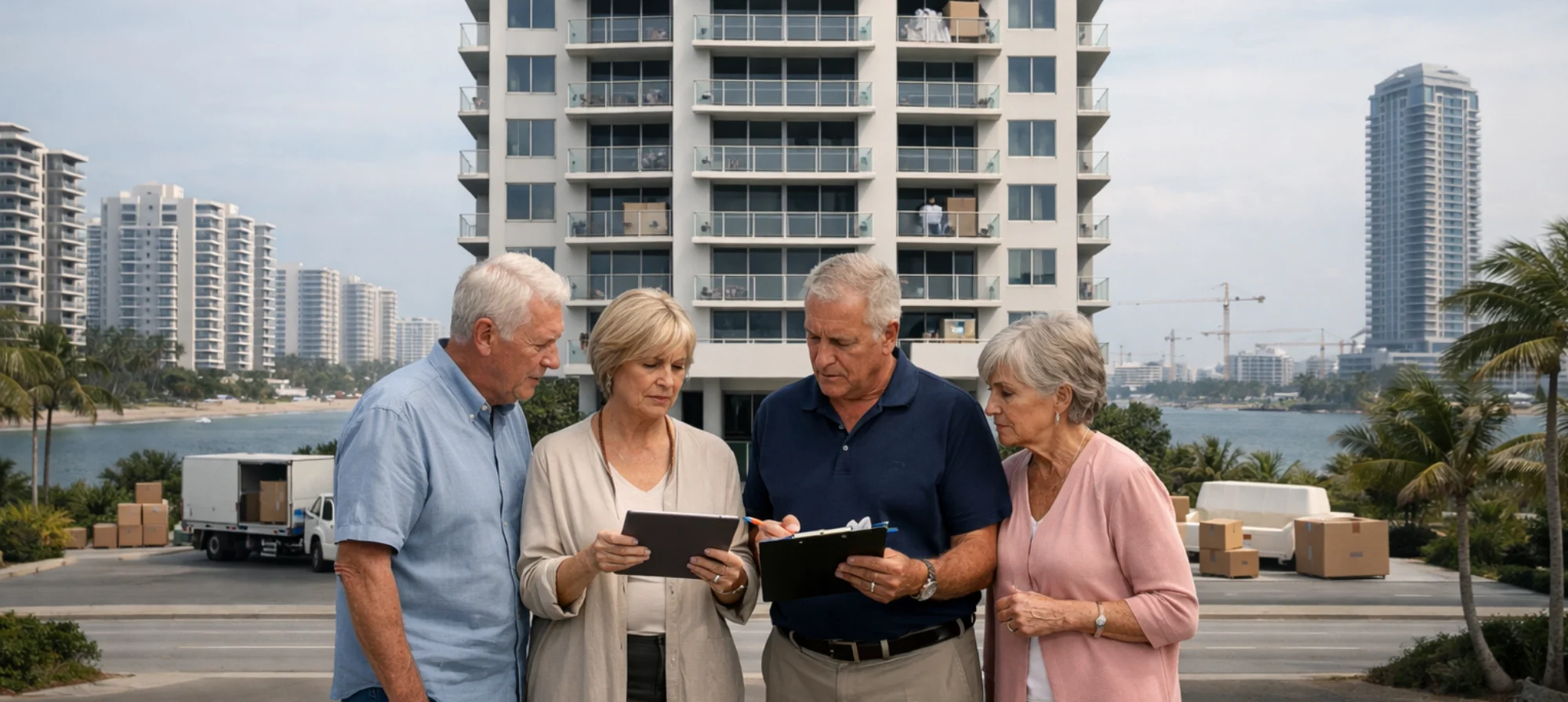
According to a recent survey, over half of Canadian property owners in the U.S. say they plan to sell within the next year. Florida real estate agents report receiving zero Canadian buyer inquiries during peak season for the first time in years. Meanwhile, Chinese investment surged 83% to $13.7 billion, but agents say interest is cooling fast since tariffs escalated. For homeowners in Broward and Palm Beach counties, this shift could reshape the market in ways that create both challenges and opportunities.
Key Takeaways
-
54% of Canadians who own U.S. property plan to sell within the next year. 62% cite the current political administration as the primary reason.
-
Foreign buyers purchased $56 billion in U.S. real estate from April 2024 to March 2025. Florida remains the top destination for at least 15 consecutive years.
-
Tariffs on Canadian lumber and Chinese materials could add up to $40,000 to the cost of a new home.
Why are Canadian snowbirds selling their Florida properties?
A Royal LePage survey found that 54% of Canadians who own residential property in the U.S. are planning to sell within the next year. Of those, 62% cite the current political administration as the primary reason. This is not just poll data. Agents are seeing it on the ground.
It is a triple hit for Canadian owners: a weak Canadian dollar hovering around 69 U.S. cents (a 22-year low), insurance premiums that have tripled or quadrupled, and new border rules requiring fingerprinting for stays over 30 days.
As Larry Mastropieri explained on the Discover South Florida Podcast, "I would agree with these polls. Fewer Canadians are buying down here, and more are trying to sell. That compounds the issue we already have in the condo market. And by the way, Canadians typically love the condos. We're definitely experiencing this."
Realtor.com data shows online shopping traffic from Canada fell 4.5 percentage points year over year. Statistics Canada reports a 13.5% decline in return flights from the U.S. and a 32% drop in vehicle crossings. Quebec broker Alexandra DuPont told reporters she has doubled her normal workload with over 30 listings, saying she has never had this much inventory in a decade. Properties are now lingering on the market for 90+ days.
Canadians spent close to $6 billion on U.S. real estate from April 2023 to March 2024, making up 13% of all foreign transactions. A 10% drop in Canadian travel alone could mean $2.1 billion in lost revenue and about 14,000 American jobs.
What is happening with Chinese and Mexican buyers?
China remains the number one foreign buyer, spending $13.7 billion between April 2024 and March 2025 according to the NAR 2025 International Transactions Report. But that data was collected before tariffs escalated in April 2025. Agents in multiple countries now report that Chinese buyers are shifting their interest toward Australia, Singapore, and the U.K.
China's domestic property crisis is a key driver of outbound investment. With real estate once accounting for 25% of GDP and prices now collapsing, wealthy Chinese buyers view U.S. property as a safe-haven asset. 71% of Chinese buyers paid all cash. The average purchase price for Chinese buyers was $1.17 million, the highest among all foreign groups. However, only 3% of Chinese purchases were in Florida. California took 36%.
Mexico's share of foreign buyers dipped from 11% to 8%, but their dollar volume actually rose from $2.8 billion to $4.4 billion. Fewer buyers are making bigger purchases. The average Mexican buyer's purchase price was $705,300, and 16% purchased homes over $1 million, up from 8% the prior year. Texas remains its top destination, accounting for 40% of transactions. Florida is not a primary destination for Mexican buyers.
All three countries face significant tariffs: Canada at 35% (with most USMCA-exempt), China at reduced rates after a truce from 100%+ levels, and Mexico at 30% plus sector levies. The uncertainty itself is the real market-mover.
How do tariffs affect real estate prices?
Tariffs are taxes on imported goods. The importing company pays them and often passes the cost to consumers. This raises prices for building materials, appliances, and everyday goods.
For real estate specifically, tariffs on Canadian lumber could add $8,000 to $12,000 to the cost of a new home. Combined with tariffs on Chinese-made fixtures and materials (another $8,000+), the total impact could reach around $40,000 per new home.
The broader economic impact matters too. Tariffs contribute to higher inflation, slower GDP growth, and delayed Fed rate cuts, all of which keep mortgage rates elevated and reduce affordability for buyers.
According to the BBC's tariff tracker, Canada currently faces 35% tariffs, with 85% of trade exempt under USMCA, plus an additional 10% tariff on timber and lumber since October. There is also a 50% levy on imported metals and 25% on non-U.S. cars. China initially faced threatened tariffs of over 100% on both sides before a truce was reached, with exclusions on 178 Chinese products extended until November 2026.
What does this mean for South Florida homeowners and buyers?
If Canadian sellers flood the market, especially in condo-heavy communities, it could increase inventory and create buying opportunities in areas like Boca Raton, Delray Beach, Fort Lauderdale, and the Broward coast.
Condo owners should watch closely. Canadian snowbirds disproportionately own condos, and their exits add to an already growing inventory problem, worsened by rising insurance costs and new 40-year inspection assessments. As we covered in our previous article on why Canadian snowbirds are selling U.S. homes, this trend has been building for months.
Larry Mastropieri noted the price segmentation effect: "In these million-dollar-and-under condos on the ocean or on the islands here in South Florida, you're feeling it. But when you get into the $10 million condos, it's a different story. You're just dealing with a lot less of this."
For domestic buyers and investors, reduced competition from international buyers could mean more negotiating room and better pricing in popular snowbird neighborhoods. Local businesses that rely on seasonal spending, including restaurants, retail, healthcare, and recreation, could feel the pinch if snowbird traffic continues to decline.
The tariff-driven increase in construction costs (up to $40,000 per new home) puts additional upward pressure on home prices, which may benefit current homeowners on resale value but hurts affordability for new buyers.
Frequently Asked Questions about foreign real estate investment in Florida
What percentage of Florida real estate is purchased by foreign buyers?
Florida has been the top destination for foreign buyers for at least 15 consecutive years, attracting 21% of all foreign purchases nationwide. Foreign buyers purchased 78,100 U.S. homes worth $56 billion from April 2024 to March 2025, a 33.2% increase in dollar volume and 44% increase in transactions compared to the prior year.
Which countries buy the most real estate in the United States?
The top five foreign buyers by country are China (15%, $13.7 billion), Canada (14%, $6.2 billion), Mexico (8%, $4.4 billion), India (6%, $2.2 billion), and the United Kingdom (4%). The median purchase price for foreign buyers reached a record high of $494,400. 47% of foreign buyers paid all cash, compared to 28% among all U.S. buyers.
How do tariffs affect home prices in Florida?
Tariffs on Canadian lumber could add $8,000 to $12,000 to the cost of a new home. Combined with tariffs on Chinese-made fixtures and materials, the total impact could reach around $40,000 per new home. Tariffs also contribute to higher inflation and delayed Fed rate cuts, which keep mortgage rates elevated.
Is now a good time to buy a condo in South Florida?
It depends on the specific building and your due diligence. Canadian snowbird exits are adding to condo inventory, potentially creating buying opportunities. However, buyers should carefully review the association's financials, reserve studies, insurance costs, and any pending special assessments related to the new 40-year inspection requirements before purchasing.
Local help for buyers and sellers navigating a shifting market
Whether you are a condo owner watching inventory rise, a buyer looking for opportunities in snowbird communities, or an investor trying to understand where the market is heading, working with someone who tracks these trends can help you make informed decisions. Reach out to The Mastropieri Group, Realtors®.
For practical, hands-on support across Pompano Beach, Fort Lauderdale, Boca Raton, and South Florida, call (561) 544-7000.
Posted by Larry Mastropieri

Enjoy this blog post? Click here to subscribe for updates

Leave A Comment