
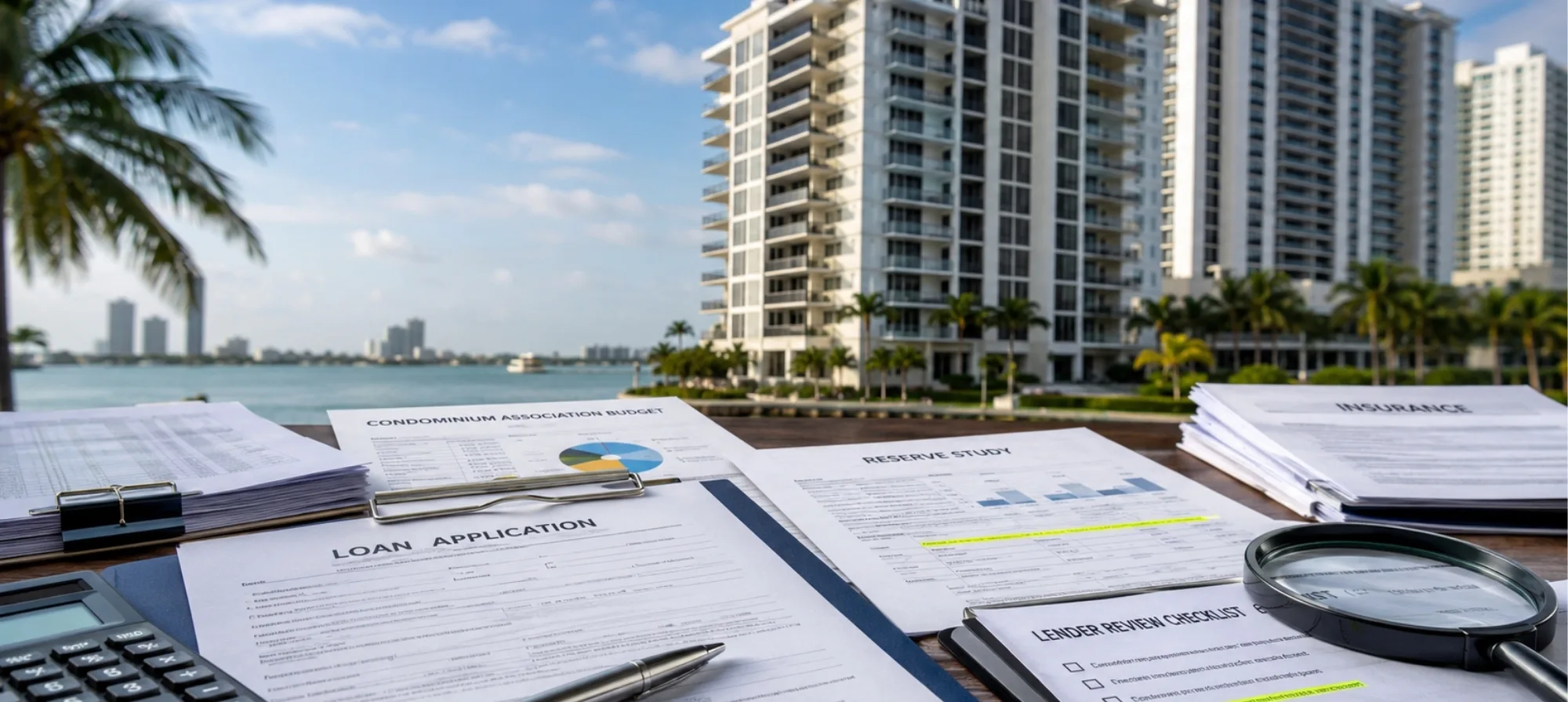
Starting August 3, a strong buyer can be turned down over their building's finances, no matter how solid their own credit is. The shift hits older, under-reserved condos hardest, which makes it a South Florida problem above all.
Key Takeaways
- As of August 3, 2026, Fannie Mae and Freddie Mac retired the fast-track condo reviews that let strong buyers skip a look at the building's finances.
- Nearly every conventional condo loan in a building over 10 units now requires a full review of the association's reserves, budget, and insurance.
- If a building fails, it becomes "non-warrantable," and every owner can lose access to normal financing, which tends to push prices down.
A federal rule change that most buyers have never heard of just made it harder to finance a condo, and South Florida sits squarely in the blast radius. According to The Real Deal, as of August 3, 2026, Fannie Mae and Freddie Mac retired the fast-track approvals that used to let strong buyers skip a look at a building's finances. Now the health of the whole association can decide whether you get a loan, and in a region full of older, under-reserved condos, that changes the math for almost everyone in South Florida.
What exactly changed on August 3?
Fannie Mae retired its Limited Review and Freddie Mac retired its Streamlined Review, the abbreviated paths that let buyers with strong credit and larger down payments get a condo loan without anyone digging into the association's books.
Now, nearly all conventional condo mortgages in buildings with over 10 units must go through a Full Review, in which the lender examines the association's budget, reserves, insurance, and overall financial and physical condition, rather than the borrower alone. Those fast-track paths were not a small pool either. They accounted for roughly 40% of all condo project reviews, according to the Community Associations Institute.
Two dates to keep in mind here. The trigger is the loan application date, so an application dated before August 3 can still close under the old rules. A second phase then lands on January 4, 2027, when buildings must budget reserves of at least 15% of their annual assessment income, up from 10%, to stay eligible for conventional financing. If you want the full list of moving parts, we broke them all down in every Fannie Mae condo change explained.
Why can a qualified buyer still get denied?
Unfortunately, yes. Even a buyer with excellent credit and a large down payment can be turned away if the building itself fails the review, no matter how clean their file is. The word that decides it is "non-warrantable." If an association misses a benchmark, like underfunded reserves or an insurance gap, the entire project becomes non-warrantable, and Fannie and Freddie will not buy any mortgage in it. That pushes every owner in the building toward scarce, higher-cost financing.
As Larry Mastropieri explained on the Discover South Florida Podcast, once a building lands on what he calls the blacklist, buyers have to reach for a non-conforming or non-QM loan, and "that comes with larger down payments for these buyers, and higher interest rates." The ripple runs straight to price. As Larry put it: "Not everybody qualifies for these loans, so it becomes more complicated, making the buyer pool smaller, which drives prices down again." That is how a paperwork rule turns into real pressure on condo values.
Buying or selling a condo in South Florida right now? The building's finances can make or break the deal. Talk to a real estate agent near Boca Raton who knows how to read an association's books. Reach out to The Mastropieri Group, Realtors® or call (561) 544-7000.
Why does this hit South Florida condos so hard?
Because the region is full of exactly the buildings this rule targets. Virtually every condo of 10 or more units in South Florida now faces a full financial review before a buyer can borrow, and that collides head-on with the post-Surfside condo crisis. Many older buildings carry years of deferred maintenance and thin reserves, and those are the ones most likely to fail.
Florida's own safety laws already require buildings three or more stories and 30 years old, or 25 near the coast, to fully fund their reserves. Getting there usually means large special assessments, and big assessments push owners to sell and scare buyers off. Now Fannie and Freddie want those reserves at 15% of the budget or the building becomes unfinanceable through conventional loans. For a lot of aging coastal condos, clearing that bar will be a real challenge.
What should condo buyers and sellers do now?
If you are buying, do the homework the lender now does. Before you commit, ask for the association's budget, reserve study, current reserve balance, master insurance policy and its deductible, and any history of special assessments. That is precisely what a Full Review checks, and reviewing it early tells you whether the building is financeable at all. It is the same due diligence we cover in what to know about condo associations before buying. If a building is already non-warrantable, plan on a pricier non-conforming loan or a cash deal.
If you are selling, timing is worth a hard look. As Larry said on the show, weighing whether to list now or wait: "This could impact the market in a way that's not favorable for you. Hard stop." His point is that the January reserve deadline could further thin the buyer pool, so moving sooner may help. That is his general read, not a rule for every situation, and the right call depends entirely on your building's finances, so it is worth checking with a professional before you decide.
Watch More on This Topic: Watch this segment | Full Episode | Last week's recap
Frequently Asked Questions
Who are Fannie Mae and Freddie Mac?
Fannie Mae and Freddie Mac are government-sponsored companies that buy mortgages from lenders and package them for investors, which keeps money flowing into the housing market. Because they purchase most conventional loans in the United States, the standards they set effectively decide which condos banks are willing to finance.
What changed with condo loans on August 3, 2026?
Fannie Mae and Freddie Mac retired their fast-track review options, Limited Review and Streamlined Review, for conventional loan applications dated on or after that day. Now almost every condo purchase in a building over 10 units requires a Full Review of the association's finances and condition, rather than the buyer's qualifications alone.
What does "non-warrantable" mean?
A non-warrantable condo is one that fails to meet Fannie Mae and Freddie Mac standards, so they will not buy mortgages secured in that building. Buyers there generally cannot use a normal conventional loan, and must rely on cash or costlier non-conforming financing, which shrinks the pool of people who can purchase.
What is the new condo reserve requirement?
Beginning with loan applications dated January 4, 2027, an association's budget must fund replacement reserves at a minimum of 15% of annual assessment income, up from the previous 10%. Associations can rely on a recent reserve study instead, but only if they fund to its highest recommended level.
Can I still get a mortgage on a condo in a struggling building?
Possibly, but not through a standard conventional loan if the building is non-warrantable. You would likely need a portfolio or non-conforming loan, which usually means a larger down payment and a higher interest rate, or you would need to buy in cash. Not every buyer qualifies for those options.
What should I check before buying a condo now?
Request the association's budget, reserve study and current reserve balance, master insurance policy and deductible, and any special-assessment history. These are the same documents a lender's Full Review examines, so reviewing them early tells you whether the building can be financed and whether an assessment may be coming.
Local help for South Florida condo buyers and sellers
Whether you are buying into a building, selling before the next deadline, or just trying to figure out if your condo is still financeable, it helps to work with a team that reads association finances every day. Reach out to The Mastropieri Group, Realtors® in Boca Raton, or call (561) 544-7000 for practical, hands-on guidance across South Florida.
Posted by Larry Mastropieri



Enjoy this blog post? Click here to subscribe for updates

Leave A Comment