
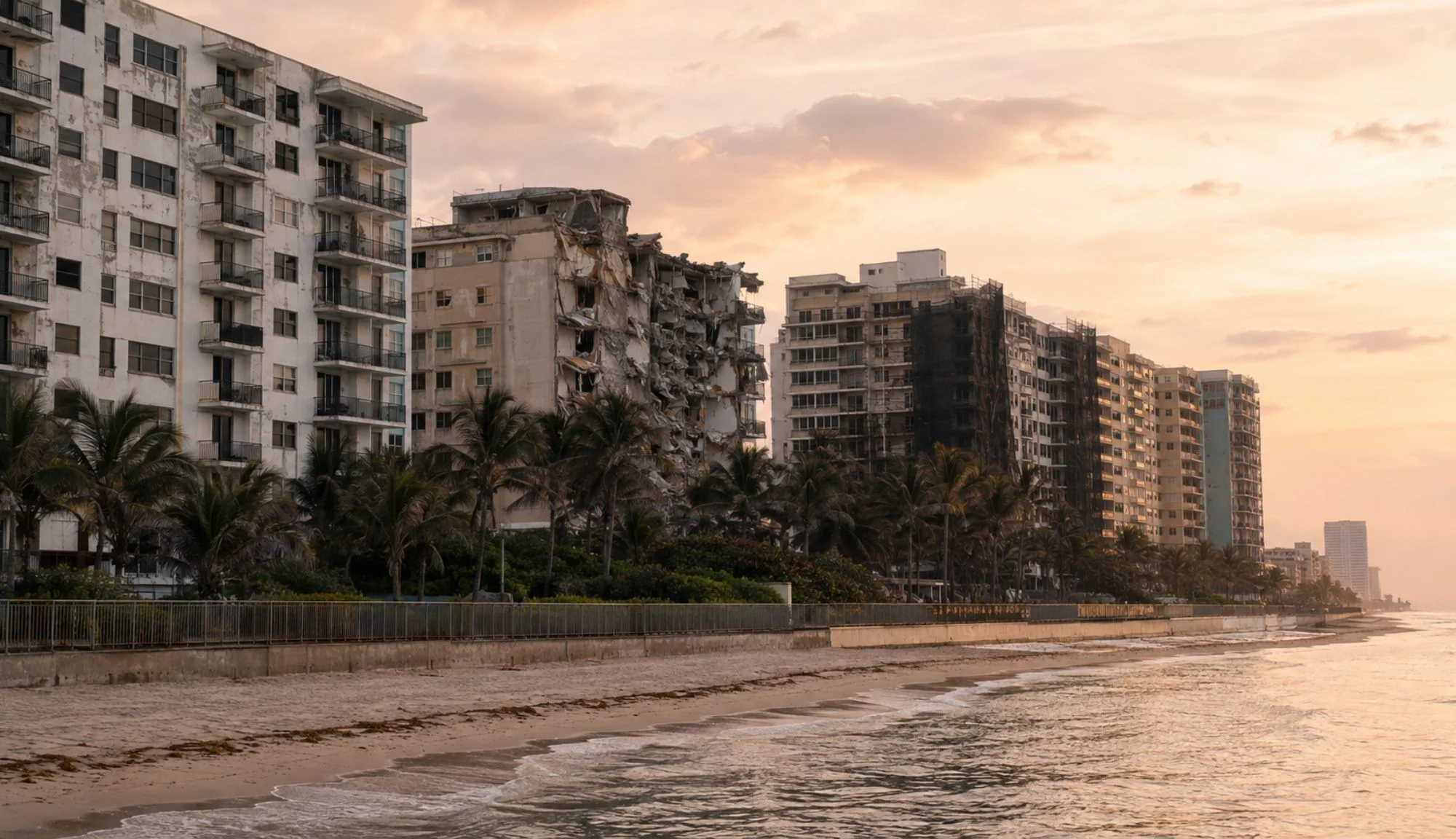
Five years after Surfside, Florida's first inspection scorecard is in, and it is sobering. For owners facing six-figure assessments on aging condos, a developer buyout is fast becoming the only way out.
Key Takeaways
- A Florida legislative report flagged 2,535 condo and co-op buildings for deeper Phase 2 inspections across 2024 and 2025, with 54 declared unsafe or uninhabitable.
- Owners hit with special assessments of $10,000 to $100,000 or more are increasingly selling to developers who buy the whole building for the land.
- If you are buying a condo 25 years or older, confirm the milestone inspection is done, reserves are funded, and no special assessment is pending before you close.
If you own a condo in South Florida, or you are shopping for one, this is the report sitting behind every buyout headline of the past two years. On August 1, 2026, the Florida Legislature's watchdog office released its first statewide look at how aging condo buildings are holding up under the post-Surfside inspection law, and the findings are sobering.
More than 2,500 buildings were flagged for deeper structural review, and here is why that matters to your wallet. A flagged building usually needs repairs, and those repairs get paid for with a special assessment; a big enough assessment is exactly what pushes owners to sell to a developer. That chain reaction is reshaping the South Florida condo market right now, for better and for worse.
What did Florida's condo report actually find?
2,535 buildings flagged, 54 declared unsafe
The 24-page report came from OPPAGA, the state's Office of Program Policy Analysis and Government Accountability. It found that 2,535 condo and co-op buildings were sent to a deeper Phase 2 milestone inspection after a first visual Phase 1 turned up structural deterioration. Building officials reported 54 buildings as unsafe or uninhabitable across both years, yet only five were evacuated in 2024, and none were evacuated in 2025. That gap between how many buildings got labeled unsafe and how few were actually cleared out is one of the more striking parts of the whole scorecard.
The real number is likely higher
Here is the catch: the numbers almost certainly undercount the problem. OPPAGA received 2024 data from only 71% of local enforcement jurisdictions and 2025 data from just 64%. South Florida is one of the biggest blind spots, because in Palm Beach County 44% of building officials never reported their 2025 data, compared with 23% in Broward and 21% in Miami-Dade. So the real number of flagged and failing buildings is higher than the report can show. If you want the fuller backdrop on how this developed, we covered Florida's condo crisis and aging buildings in an earlier piece.
The backlog is getting worse
The backlog is real, and it is growing. Of the 2,535 buildings flagged for a Phase 2 structural inspection, only 1,575 are complete, leaving roughly 960 still outstanding, on top of about 2,900 required Phase 1 inspections that have not been done and 1,587 deadline extensions granted (94% of them coastal). Phase 2 completion actually fell from about two-thirds in 2024 to roughly four in ten in 2025, which the report blames on a shortage of qualified engineers.
Why do these inspections trigger such massive bills?
The rules and the December 2026 deadline
The rules come from the post-Surfside overhaul, SB 4-D in 2022, refined by SB 154. Condos and co-ops three stories or taller have to pass milestone inspections and fully fund their reserves. Buildings within three miles of the coast get inspected at 25 years old, 30 years elsewhere, then every 10 years after that. For a lot of buildings, the milestone deadline is December 31, 2026, and missing it can bring $500-per-day fines, code referrals, and even vacate orders. Once a Phase 2 report calls for repairs, that work has to begin within 365 days.
Three costs hit at the same time
What makes this so painful is that three costs land on older buildings at the same time: repairs from a failed inspection, newly mandatory reserves, and soaring insurance. Boards cover all of it with one-time special assessments that commonly run from $10,000 to more than $100,000 per unit. Fining a building that already cannot afford the repairs does not make the money appear, which is the whole problem. For owners, that surprise bill is the moment the math breaks, and it is why we walk clients through how special assessments and reserves affect selling before they list. You can read more on how the state's condo law changes hit longtime owners.
How the condo crisis is pushing owners toward buyouts
When the math stops working
Picture a building facing $10 million in repairs, where every owner gets assessed $200,000, but each unit is only worth $500,000 to $700,000 on the open market. Nobody can easily sell one unit in a building flagged for structural work, and the assessment is more than many owners can pay. That is the setup where a developer offering to buy the entire building stops being a rumor and starts being a real exit.
On good dirt, a buyout can pay off
As Larry Mastropieri explained on the Discover South Florida Podcast, the buyout only works when the location is valuable: "We've seen developers roll in, if the dirt is good, and pay a million bucks, or some number that you would never have gotten otherwise." On desirable coastal land, that kind of offer can pay owners more than a normal sale ever would, which is how assessment-burdened waterfront condos turn into teardown sites for new towers. That is the same pattern behind the La Fontana co-op sale and Stephen Ross buying up the Southbridge building near Mar-a-Lago.
Without the right location, owners are stuck
The problem is that not every building sits on land a developer wants. As Larry put it: "That's the one saving grace some of these buildings have. But then you have the buildings that don't have the good dirt, or the desirable dirt." For those owners, no white knight is coming. In parts of western South Florida, a unit that was worth $75,000 can drop to $25,000 once an assessment hits, and there is almost no way to solve it, which is part of why some analysts warn condo prices could fall sharply. Oceanfront owners land somewhere in between: the buildings hold value, but the assessments are brutal, so many are selling and using the proceeds to cover the bill, or simply taking the loss and moving on.
Weighing a buyout, a sale, or a purchase in a flagged building? Talk to a real estate agent near Boca Raton who has actually closed these complicated condo deals. Reach out to The Mastropieri Group Realtors® or call (561) 544-7000.
What this means if you are buying or selling a condo
As Larry said on the show: "For those of you thinking about buying a condo in South Florida, especially ones that are 25 years or older, you really need to be cautious of what you're doing." Florida law gives buyers the right to collect a long list of association documents, and even the right to cancel if the seller does not provide them, so the paperwork is your protection. The trouble is that most agents never chase it down. In Larry's words: "I will tell you that 90% of realtors that represent buyers out there do not get all the diligence documents." Working with a team that knows condos, and exactly which documents to demand, can make or break your investment.
Watch More on This Topic: Watch this segment | Full Episode | Last week's recap
Frequently Asked Questions
What is a milestone inspection in Florida?
It is a state-required structural check for condo and co-op buildings three stories or taller. Buildings within three miles of the coast are inspected at 25 years old, and 30 years inland, then every 10 years after. A visual Phase 1 comes first, and if it finds substantial deterioration, a deeper Phase 2 engineering inspection follows.
What happens if a condo fails or misses its milestone inspection?
Missing the deadline, which is December 31, 2026 for many buildings, can bring $500-per-day fines, code referrals, and possible vacate orders. A failed inspection triggers repairs that must begin within 365 days, and those repairs are usually funded through a special assessment on every owner.
Why are developers buying entire condo buildings?
When repair costs and assessments climb higher than the units are worth, owners can vote to sell the whole building instead. On valuable coastal land, a developer buyout can pay owners more than a normal unit sale would, and it clears the site for a new tower. On less desirable land, those offers rarely come.
Should I buy an older condo in South Florida right now?
You can, but do your homework first. Confirm the building's milestone inspection status, whether reserves are truly funded, and whether any assessment is pending before you close. A flagged or uninspected building can hand a new owner a five- or six-figure bill soon after purchase.
Can I get a mortgage on an older South Florida condo?
It can be harder than for a house. Lenders, and agencies like Fannie Mae, often will not finance units in buildings with failed inspections, unfunded reserves, or major litigation, which shrinks the buyer pool. Some of these sales go cash-only, but with the right association documents in hand, financing is often still possible.
Local help for condo buyers and sellers across South Florida
Whether you are weighing a buyout, trying to sell before an assessment lands, or buying into an older building, it helps to work with a team that has closed these deals and knows which documents to demand. Reach out to The Mastropieri Group Realtors® in Boca Raton, or call (561) 544-7000 for practical, hands-on guidance across South Florida.
Posted by Larry Mastropieri




Enjoy this blog post? Click here to subscribe for updates

Leave A Comment