
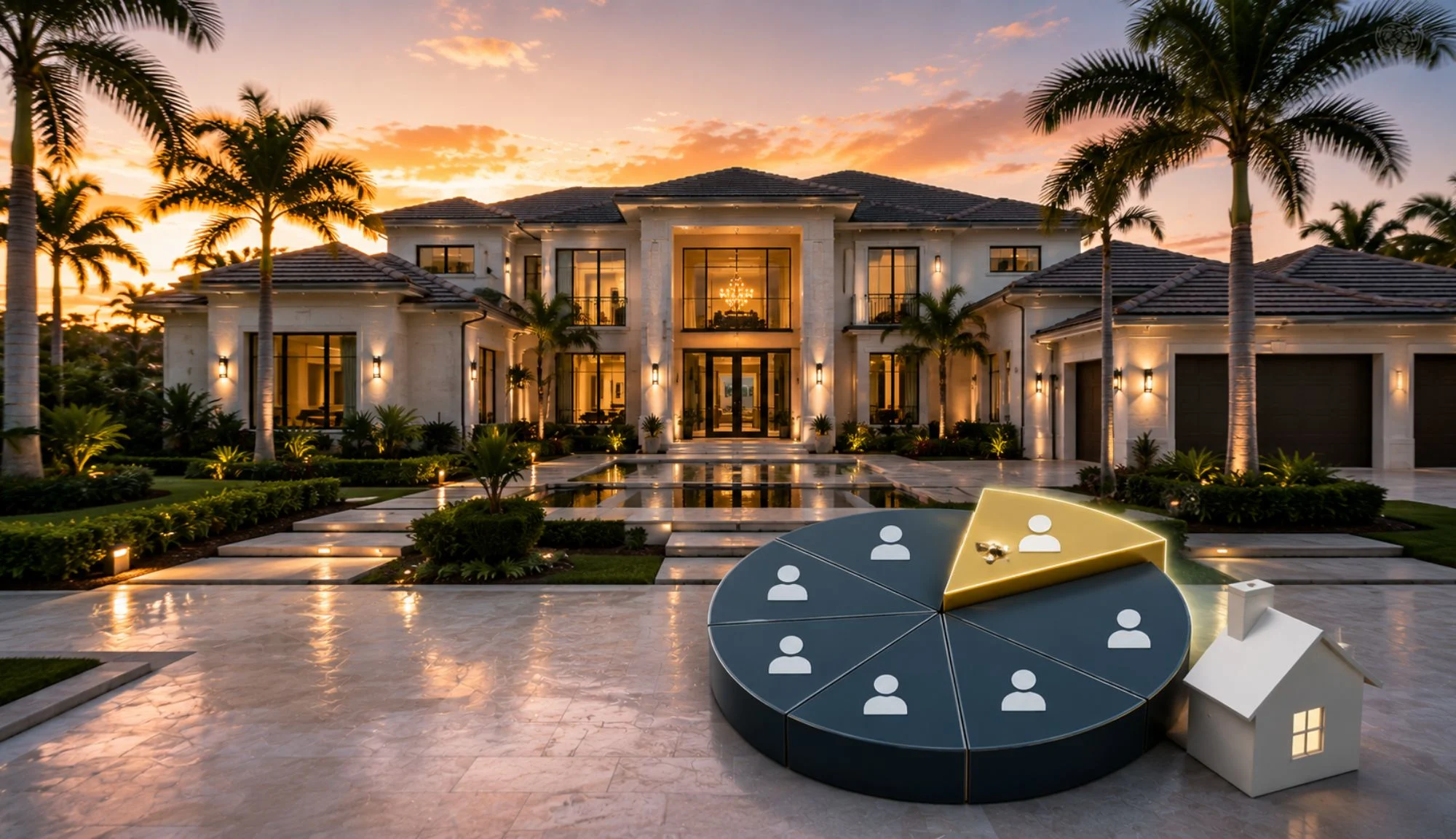
Fractional ownership is not a scam, but it is the wrong tool for a first-time buyer. It sells you a deeded slice of a luxury home, often one-eighth, that you use only a few weeks a year, much like a timeshare. That cannot solve the real problem, because a first-time buyer needs a full-time place to live. Most lenders will not finance a fractional share, and the live-in versions, like owning a quarter of a fourplex, rarely qualify either. If your goal is to split the cost of a real home, the smarter path is co-buying with one person you know and trust. That version you can actually finance and live in.
What Fractional Ownership Actually Is
Fractional ownership sounds new, but it fills a narrow corner of the market. The idea is simple. A developer takes a high-end home, splits it into shares, and sells each share to a different buyer. You own a real, deeded slice of the property, usually held inside an LLC.
As Larry Mastropieri explained on the Discover South Florida Podcast: "The fractional ownership thing is like a small segment of the marketplace."
He gave a real example from the local market: "We built this new construction home, and we're selling one-eighth of the home to a buyer for 600,000-1,000,000 bucks."
In South Florida, this shows up most on new luxury builds in Fort Lauderdale and Miami. A single home might be carved into eighth shares priced from $600,000 to a million dollars each. Buy one, and you co-own that property with seven other people. The pitch is access. For the price of a down payment on a whole home, you get a stake in a property most buyers could never afford outright.
Why It Works More Like a Timeshare Than a Home
The catch is what your share actually buys you. You are not getting a home to live in. You are getting the right to use a vacation property for a set stretch of the year, much like a timeshare with a deed attached.
Larry compared the usage to a familiar product: "You get it for a month, a month and a half out of the year. So it's more like a timeshare deal."
That usage window matters. With an eighth share, you typically get around six weeks in the home each year. The rest of the time, it belongs to the other owners, people you have likely never met.
He flagged the obvious risk: "You're buying this home with seven other people that you don't know basically."
One thing does separate it from a classic timeshare. Because your share is deeded real estate, it can gain or lose value with the property, so you hold an actual asset.
A Vacation Product, Not a Place to Live
Strip away the marketing and the difference from real homeownership is stark. Here is how a fractional share stacks up against owning your own home:
- You use the property a few weeks a year, not as a full-time roof over your head.
- You share the home with several co-owners you usually do not know.
- Most shares cover luxury second homes, not the starter property a first-time buyer needs.
- Many banks and credit unions will not write a mortgage on a fractional share.
Tempted by a fractional or shared-ownership pitch? Before you commit, talk to a South Florida real estate agent who can tell you what it really gets you. They will also be honest about whether it fits your goals. Reach out to The Mastropieri Group or call (561) 544-7000.
Can a First-Time Buyer Actually Use Fractional Ownership?
Here is the honest answer to the scam question. Fractional ownership is a real, legal product, so it is not a fraud. It is built just for a second-home buyer, not for someone trying to stop renting.
A first-time buyer in Palm Beach County needs a place to live, and a few weeks in a shared vacation house does not solve that. Most first-time buyer programs and low-down-payment loans also require the home to be your primary residence, which a fractional share is not.
The Live-In Versions Are Not Financeable
What about the versions where you live in part of the property? Picture buying a quarter of a four-unit building and taking one unit as your home. On paper, it sounds clever. In practice, the financing simply does not exist for most buyers.
Larry's answer to this alternative was direct: "I think the answer is run from that. Don't do it. It's not even possibly feasible to do because of financing structures that are required."
A standard mortgage assumes one owner, or a couple, buying a whole home. Split the title among strangers, and most lenders walk away, which leaves cash or costly private financing as the only routes.
A Smarter Path: Buy With Someone You Know
If the goal is to split the cost of a real home, there is a far better route: buy with one person you know and trust, rather than seven you do not. More than a third of 2026 buyers now plan to purchase with a friend, sibling, or parent instead of a spouse.
Larry contrasted it with buying alongside a friend: "You got one other partner. You know these people, you can kind of structure something. You have a little bit more confidence."
This path works because it can actually be financed. A first-time buyer can still use an FHA loan with a low down payment and live in the home. Extra units can even be rented out to help cover the mortgage. The key is structure. This path comes with real responsibility, though. Everyone on the mortgage is liable for the full payment, so if one partner stops paying, the others will have to cover it.
Affordability has pushed buyers to get creative, and pooling resources is one result. Our latest South Florida market report shows where prices and conditions stand right now.
First-time buyers across Boca Raton and Delray Beach are using this approach to enter the market. If you go down this route, protect the friendship and the investment:
- Share full financial details up front, and pull each other's credit before you commit.
- Rent together first, since a lease is far easier to leave than a mortgage.
- Put house rules and an exit plan in writing, including how you split costs.
- Sign a tenancy-in-common or joint tenancy agreement that spells out each owner's stake.
Get an Agent to Map a Real Path to Your First Home
Fractional ownership is not a scam, but it will not get a first-time buyer out of renting and into a home. The smarter moves, buying solo within your budget or co-buying with someone you trust, both start with honest advice. The Mastropieri Group helps first-time buyers across South Florida sort the real options from the dead ends and build a plan that fits. So before you chase a share of a vacation home, talk to us. Reach out to The Mastropieri Group, Realtors® or call (561) 544-7000. We will find a path to a home that works for you.