
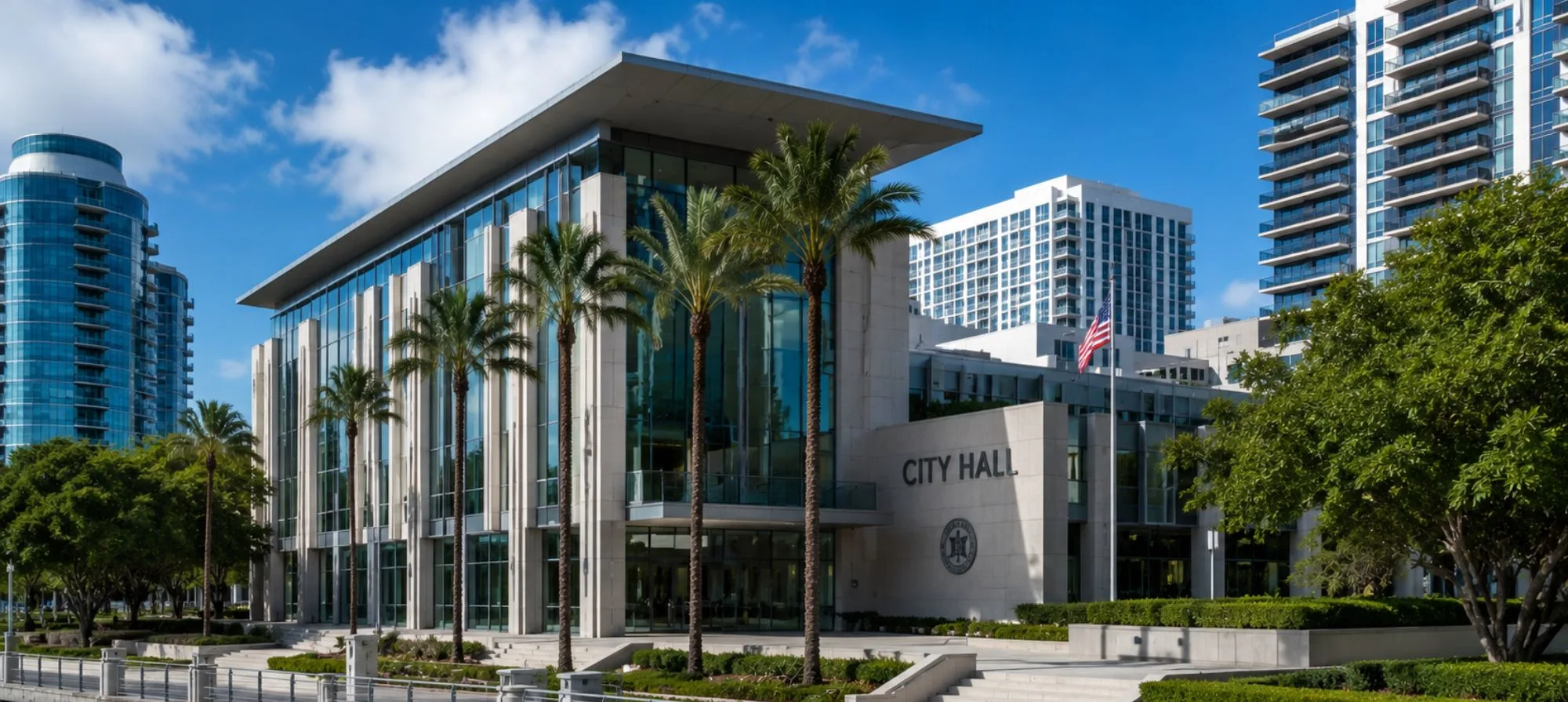
Commissioners trimmed $50 million from the plan and still approved a $217.1 million City Hall plan on a 3-2 vote. Two of them thought it was still too much.
Key Takeaways
- Fort Lauderdale gave preliminary 3-2 approval to a new $217.1 million city hall, down from the original $268 million plan.
- The developer scrapped a $12 million fee and a 10% equity stake, cutting annual payments to $15.8 million a year for 30 years.
- The vote is preliminary and does not bind the city, which can still explore buying an existing downtown building instead.
"Great cities have great city halls". That was the pitch. The question every Fort Lauderdale taxpayer is now asking is what a great city hall should cost. According to The Real Deal, commissioners voted 3-2 to move forward with a brand-new city hall at 100 North Andrews Avenue for $217.1 million, roughly $50 million less than the original proposal.
We have followed this one from the start, from the six competing proposals that came in during 2025 to the decision to build new at $260 million. The price has come down since then. Whether it has come down enough is the real debate.
What was approved, and how did the price drop?
The 3-2 vote and the team behind it
Commissioners voted 3-2 in favor of having FTL City Hall Partners LLC build the new city hall. The development team includes Core Construction and the Fort Lauderdale-based Stiles firm, with design by the Palma and PGAL architecture firms. The vote split Yes from Mayor Dean Trantalis and commissioners Steve Glassman and Pamela Beasley-Pittman, against No from Vice Mayor Ben Sorensen and Commissioner John Herbst, who both flagged cost and the option to buy an existing building instead.
Where the $50 million came from
The $50 million savings came from two specific concessions: the developer dropped its planned $12 million developer fee, and the 10% equity stake in the building. That pulled the design-build cost down from about $268 million to $217.1 million. It also cut the annual bill: debt service, maintenance, and operations. These now run at $15.8 million a year for 30 years, or $474 million total, down from $24.1 million a year and $723 million total. Over the life of the deal, that is roughly $249 million in savings.
It is worth noting that this is only a preliminary approval. It does not bind the city to the project or to a final agreement, and Fort Lauderdale can still explore buying an existing building. A yes vote is a green light, not a signed contract.
Should the city have just bought a building instead?
This was the heart of the fight, and it is the part that matters beyond city hall. Buying an existing tower and renovating it sounds cheaper and faster than building from scratch. Fort Lauderdale actually ran the numbers on three downtown buildings, and the gap was smaller than you might expect:
- New build (FTL City Hall Partners): $217.1 million, $15.8 million a year.
- Ivy Tower 101: about $227.4 million to buy and renovate, $14.1 million a year. It appraised below the landlord's $86 million asking price.
- One East Broward: about $289 million to buy and renovate, $17.9 million a year, before operations and maintenance. It appraised below the $122.4 million asking price.
- Federal courthouse (299 East Broward): nearly $228 million to buy and renovate, decades old and needing a full code upgrade.
Notice that the new build is the cheapest sticker price on the list. Two of the three buildings appraised for less than their owners were asking, meaning the sellers wanted more than the buildings were worth. Commissioner Herbst pushed back on the renovation estimates, questioning whether things like windows really needed full replacement, and the city's consultant answered that decades-old buildings have to be brought up to current code. Mayor Trantalis put the instinct plainly: he is always hesitant to buy something used because "you get what you pay for."
Weighing a renovation project against new construction in South Florida? Talk to a real estate agent in Fort Lauderdale who can help you price the hidden costs before you commit. Reach out to The Mastropieri Group or call (954) 833-1468.
Is $217 million too much for a city hall?
Two sides of the argument
Here is where the voting difference comes in. Commissioner Glassman argued that if Oakland Park, Sunrise, Pompano Beach, and Miami can all build civic structures their residents take pride in, so can Fort Lauderdale. On the other side is the number itself, and a real estate professional's skepticism about who is spending it.
Larry Mastropieri made that case bluntly on the Discover South Florida Podcast. His view: "The reality is, they're not real estate investors. They don't know what they're doing. They're getting guidance from whomever; they're playing with other people's money. That's a recipe for a disaster, and that's why we frequently see problems with city governments managing anything." That is his opinion, not a prediction, but it points to the actual risk: big public builds depend on the people managing them, and cities do not build for a living.
Excited about the building, cautious about the budget
To be fair to the project, Larry is not against it. As he put it, he is usually pro-development, and this will be a good-looking building when it is done, assuming they do not mess it up. His hesitation is the size of the check, not the idea of a new city hall. That is a fair place to land: excited about the building, cautious about the budget.
What about the timing and the tax risk?
A 30-year bill as the tax base could shrink
The dissenting commissioners raised one more point worth understanding. In November 2026, Florida voters will decide on a statewide referendum to increase the homestead exemption, which could lower property tax collections across the state. Fort Lauderdale is committing to $15.8 million a year for 30 years at a moment when its own tax base could shrink. Locking in a long-term payment while revenue faces a question mark is exactly the kind of risk a no vote is meant to flag, and it connects to a bigger story we have covered in Florida's property tax debate.
There is a counterpoint, and Larry made it: the city was going to spend somewhere in the range of $12 to $16 million a year no matter which option it chose, so the practical difference between building and buying is smaller than the headline numbers suggest. Once you accept that a functioning city needs a functioning city hall, the debate narrows to how the money is managed, not whether it gets spent.
A new design on flood-scarred ground
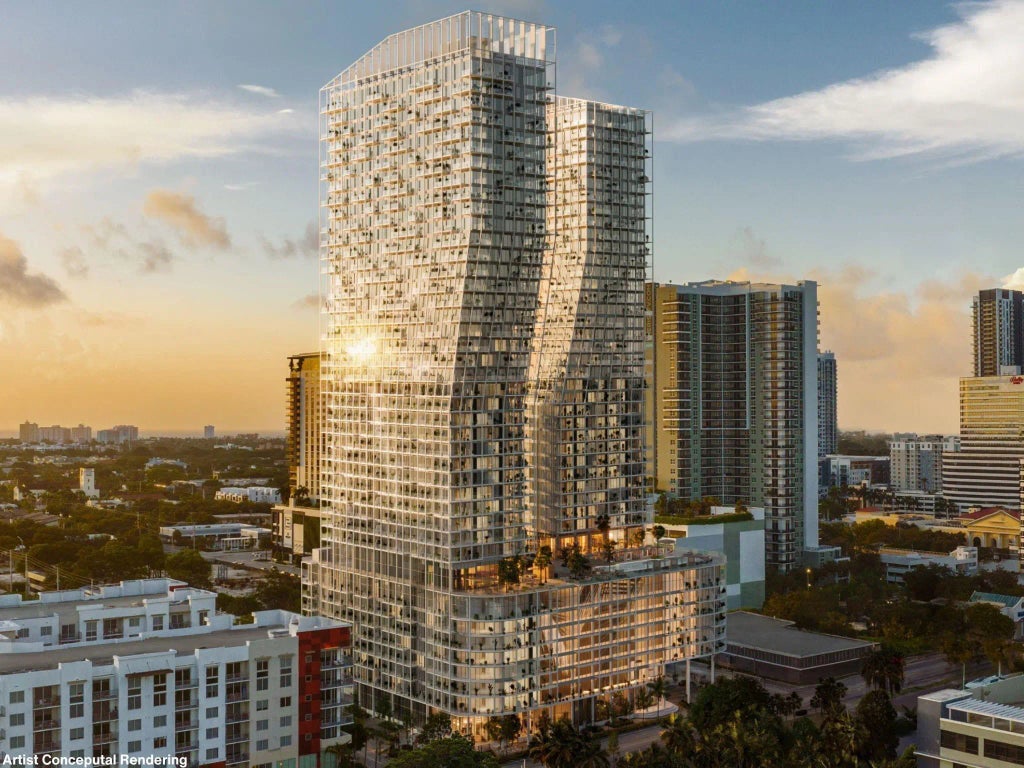
For the record, the original design was a 14-story oval tower with a futuristic look. The reworked budget likely means a simpler building; renderings now show two rectangular options on the same site, with commissioners expected to choose later. That site is the same ground where the previous city hall stood before the record April 2023 flood put more than eight feet of water in its basement and destroyed its servers and electrical systems. Whatever gets built next will presumably be designed with that flood in mind.
Watch More on This Topic: Watch this segment | Full Episode | Last week's recap
Frequently Asked Questions
How much will Fort Lauderdale's new city hall cost?
The design-build cost is $217.1 million, down from the original $268 million proposal. The city would pay about $15.8 million a year for 30 years for debt service, maintenance, and operations, roughly $474 million in total.
Why is the new city hall cheaper than first proposed?
The developer, FTL City Hall Partners, dropped a planned $12 million developer fee and a 10% equity stake in the building. Those two concessions significantly cut both the upfront design-build cost and the long-term annual payments.
Could Fort Lauderdale have bought an existing building instead?
It considered three: Ivy Tower 101, One East Broward, and the federal courthouse. All would have cost roughly $227 to $289 million to buy and renovate, so the new build was actually the lowest sticker price.
Is the city hall project final?
No. The 3-2 vote is preliminary approval only. It does not bind the city to a comprehensive agreement with the developer, and Fort Lauderdale can still explore buying an existing building before anything is finalized.
Why was a new city hall needed in the first place?
The previous city hall at 100 North Andrews Avenue was demolished after the record April 2023 flood, which put more than eight feet of water in the basement and destroyed servers and electrical systems. The new building would rise on the same site.
Local help for buyers and investors in Fort Lauderdale
If you are buying, selling, or investing in Fort Lauderdale, it helps to work with a team that understands how big downtown projects and shifting budgets shape the market. Reach out to The Mastropieri Group Realtors®. For practical, hands-on support across Fort Lauderdale, call (954) 833-1468. You can also browse current homes for sale in Fort Lauderdale.
Posted by Larry Mastropieri








Enjoy this blog post? Click here to subscribe for updates

Leave A Comment