
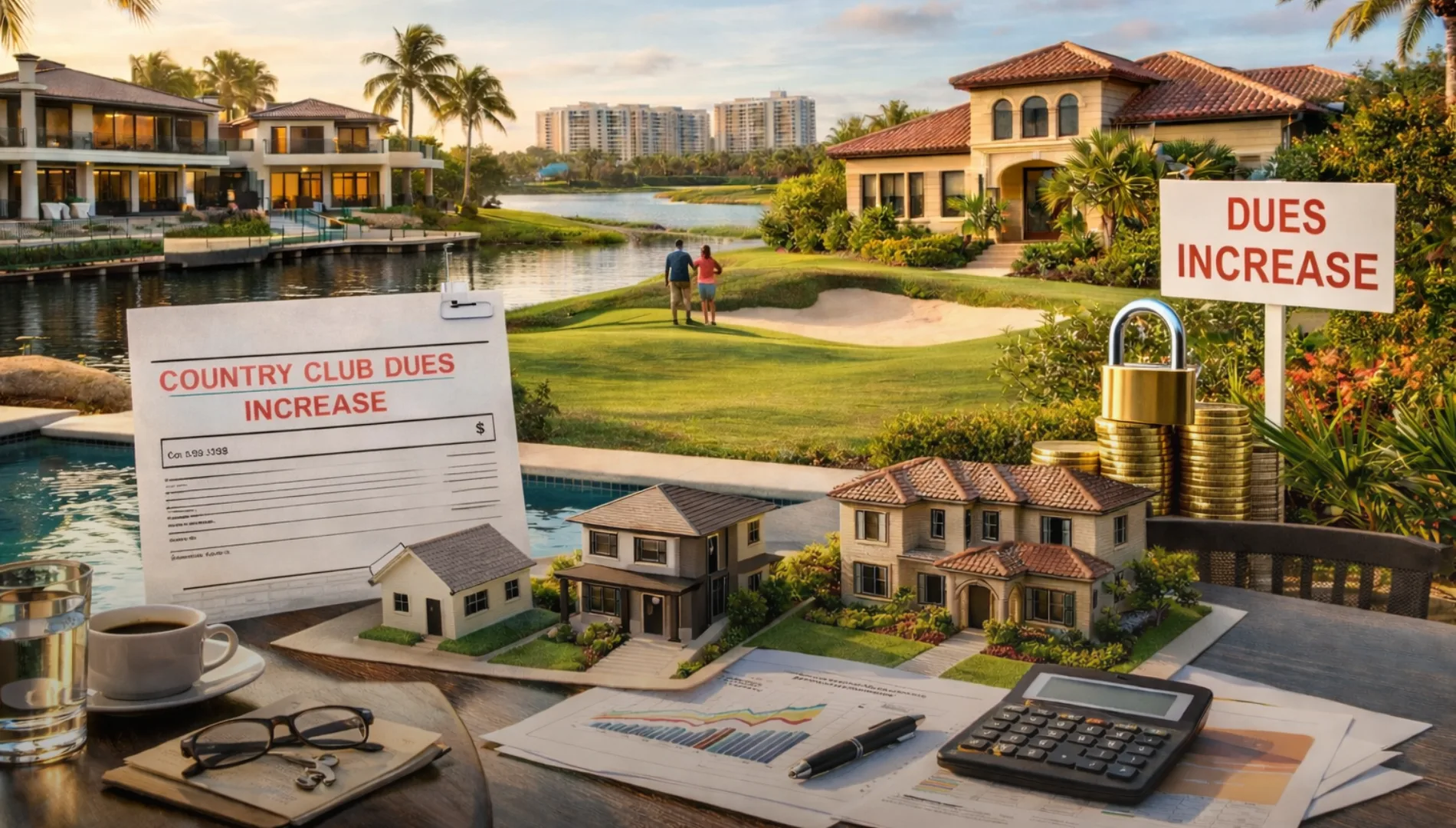
If you live in a country club community, you’ve probably noticed the pattern. Monthly statements are creeping up, renovation updates are more frequent, and club calendars look busier than they did a few years ago. Country club dues in 2026 are expected to rise nationwide, with many clubs planning increases of around 5%. For homeowners and buyers, this is more than a lifestyle issue. It’s a real estate consideration that can affect pricing, demand, and long-term value.
In South Florida, the country club is rarely just an amenity. It often functions as a core driver of property demand, buyer perception, and resale strength. When dues rise this year, it can influence buyer budgets, timing decisions, and how homes inside club communities are positioned relative to non-club alternatives.
KEY TAKEAWAYS
-
Country club dues in 2026 are rising nationally, and the impact can be more pronounced in South Florida club communities tied closely to home values.
-
Buyers should evaluate country club dues as part of the total cost of ownership, alongside taxes, insurance, and HOA fees.
-
Sellers can use dues increases strategically when they’re backed by visible upgrades and strong membership demand.
Why South Florida country club dues are going up
These increases aren’t just rumors or chatter. A survey of hundreds of country clubs by Club Benchmarking, a provider of private club-specific business intelligence tools and services, foundthat clubs are planning a median 5% operating dues increase in 2026.
That national trend carries extra weight in South Florida, where club dues are a meaningful part of the total cost of ownership. Buyers evaluate not just the home, but how modern, active, and financially stable the club feels. Rising payroll, insurance, utilities, maintenance, debt service, and capital improvements all help explain why dues are climbing in 2026, especially at clubs investing in amenities members actually use.
What higher dues can mean for home values
From a real estate standpoint, country club dues are not automatically negative. Their impact depends on what the increases fund. When higher dues are paired with visible upgrades and strong membership demand, buyers often accept them as part of a premium lifestyle. In many South Florida golf communities, home values benefit when the club feels modern, active, and well-managed.
However, when fees rise without clear improvements, buyers tend to push back. That’s when dues become a negotiation point rather than a value signal. This is why sellers should understand the club’s current projects and long-term plans before listing.
That sensitivity is especially important for investors and sellers to understand. As Larry Mastropieri said on the Discover South Florida Podcast, "If you’re thinking about buying in a country club community, you have to understand how pricing, demand, and market cycles behave there. These communities tend to be more sensitive than typical homes. In softer markets, condos often feel it first, followed closely by country club properties, because mandatory memberships and higher carrying costs reduce the overall buyer pool.”
This doesn’t mean country club homes are a poor purchase. It means pricing, timing, and buyer education matter more than they do in many non-club neighborhoods.
The modern country club is built around a daily lifestyle
The traditional golf-only model is fading. Today’s clubs are designed to be active throughout the week, not just on weekends. Golf still matters, but it now shares importance with pickleball, fitness, dining, wellness, and family-oriented programming.
This shift is central to understanding country club dues in 2026. Clubs are redesigning how members use space, creating environments that fit modern schedules and multi-generational households. In many South Florida country club communities, buyers care just as much about restaurants, gyms, and racquet sports as they do about the course itself.
How waitlists and membership scarcity work in club communities
Scarcity plays a powerful role in country club real estate. Demand has pushed waitlists higher across the industry, concentrating strength in fewer, well-capitalized clubs. When access is limited, and membership remains desirable, higher dues are often viewed as a sign of exclusivity rather than a drawback.
In South Florida, where many buyers specifically seek club lifestyles, country club dues can actually reinforce value when they coincide with controlled membership and consistent demand. Buyers aren’t just purchasing a home—they’re buying access.
Resort-style club communities and long-term positioning
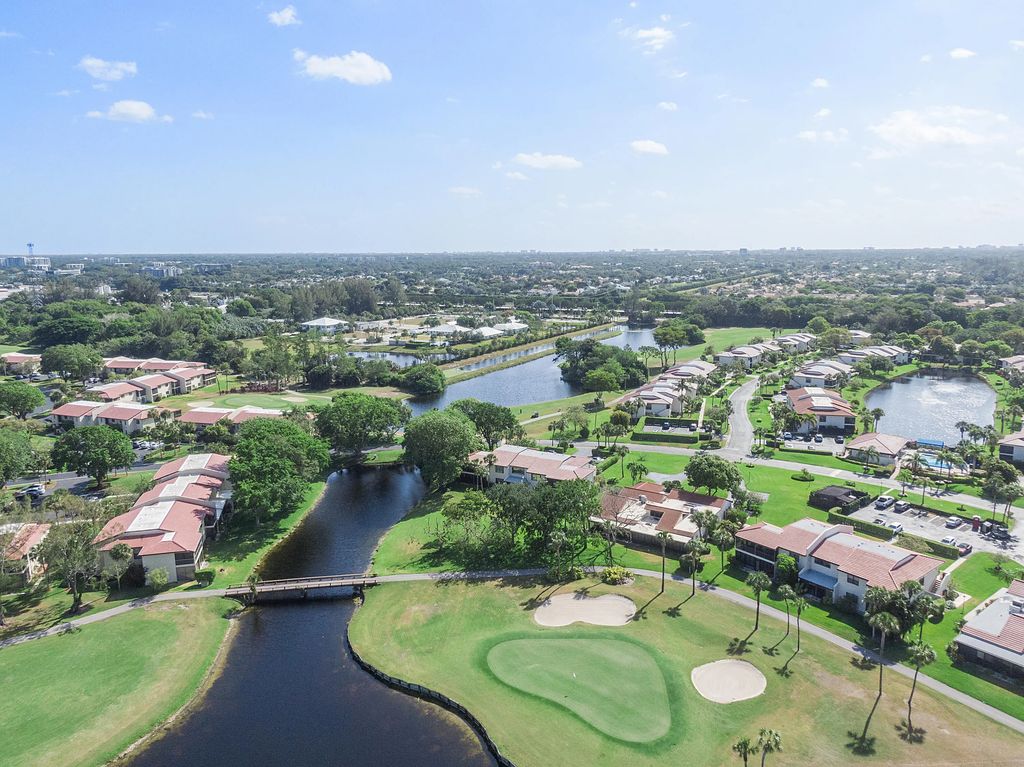
Many clubs are expanding beyond the traditional model by adding homes, hospitality-style amenities, and resort-level features around the course. When executed well, this approach turns the club into a lifestyle hub and strengthens surrounding real estate.
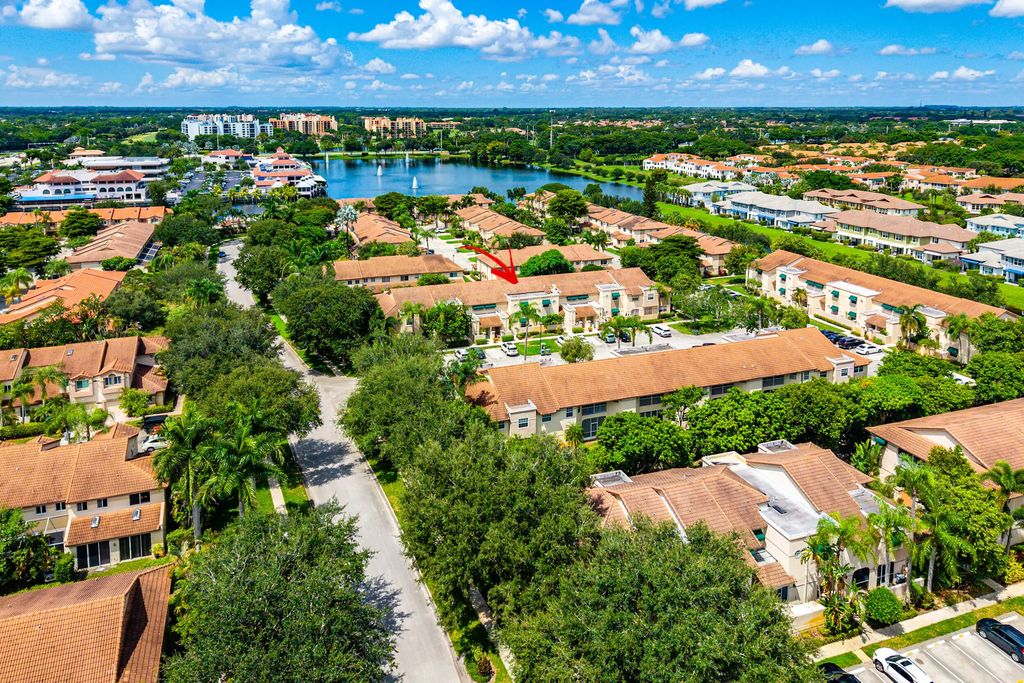
In South Florida, this connection between club investment and home values is easy to see. In communities like Boca West, prices range from lower-priced condos in the low-$100Ks up to estates near $9 million, all supported by a deep amenity mix that includes golf, racquet sports, dining, and wellness. At the Country Club of Florida, the median home price recently reached about $2.4 million, up 11.6% year-over-year. These examples help explain why buyers here pay close attention to how clubs are evolving—when amenities stay current, and demand remains strong, real estate values often move higher alongside them.
How buyers should evaluate country club dues in 2026
If you’re buying into a club community, don’t focus only on the dues number. Ask what the money supports:
-
Are major upgrades underway or already completed?
-
Is membership demand growing or declining?
-
Are there flexible membership options that match how you’ll use the club?
-
How active is the club outside peak season?
Country club dues in 2026 should be evaluated the same way as taxes, insurance, and HOA rules—as part of the full ownership picture and future resale story.
FAQ about country club dues in 2026
Are country club dues in 2026 increasing nationwide?
Yes. A national survey by Club Benchmarking found that clubs across the U.S. are planning a median 5% operating dues increase for 2026, driven by higher operating costs and capital improvements.
Will higher country club dues in 2026 reduce demand for homes in South Florida club communities?
No, not necessarily. In South Florida, higher dues often coincide with visible upgrades and strong membership demand, which can help support buyer interest and home values when the club remains active and well-managed.
Are country club dues in 2026 higher in South Florida than in other regions?
No, not always. The percentage increases are generally similar nationwide, but South Florida homeowners often feel the impact more because club membership is closely tied to lifestyle expectations and real estate pricing.
Should sellers be concerned about higher country club dues in 2026?
No, not if the dues are tied to visible improvements and a clear plan. Sellers do best when they can explain what the dues support, how active the club is, and why the community remains competitive.
Local help for buyers, sellers, and investors in South Florida
If you’re buying, selling, or investing in South Florida, it helps to stay focused on the factors that shape real value—country club dues in 2026, community rules and membership costs, nearby development activity, zoning shifts, and the pricing trends buyers are responding to right now. If you’re considering a home inside a club community or just want clear guidance on how these costs affect your options, reach out to The Mastropieri Group, Realtors®.
For practical, hands-on support across South Florida, call (561) 544-7000.
Posted by Larry Mastropieri

Enjoy this blog post? Click here to subscribe for updates

Leave A Comment