
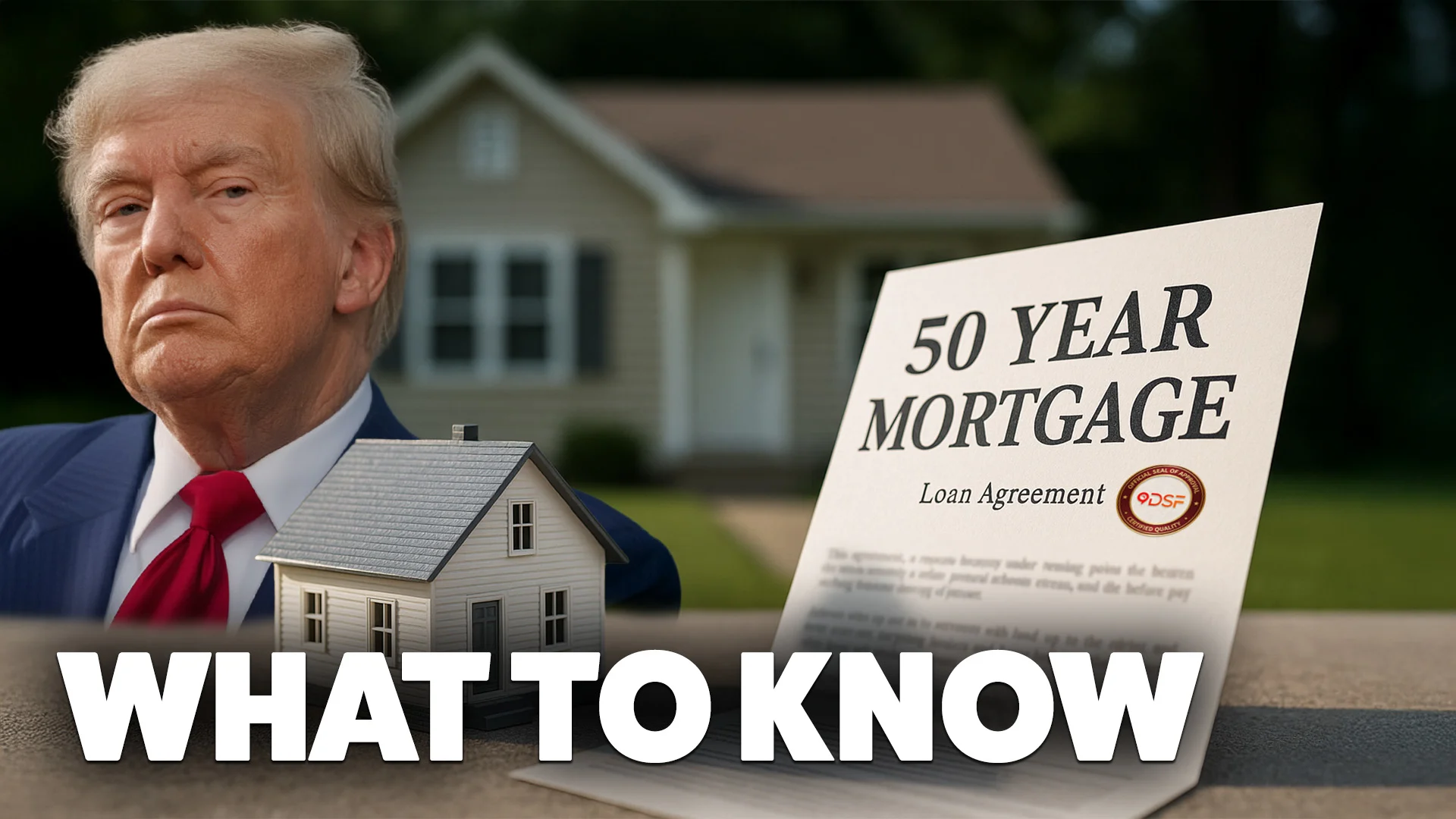
In November 2025, President Donald Trump introduced the idea of a 50-year mortgage as a solution to housing affordability issues. The Trump 50 year mortgage proposal suggests extending the standard mortgage term from 30 years to 50 years to help more Americans qualify for home loans by reducing their monthly payments.
Framed as a "common-sense idea," Trump said this plan could help everyday Americans achieve the American Dream of homeownership by making monthly housing costs more manageable. While the proposal is not yet official policy, it has already sparked nationwide debate among housing experts, lawmakers, and real estate professionals.
What Is the Trump 50 Year Mortgage Proposal?
In early November 2025, Donald Trump introduced the idea of a 50-year mortgage through media interviews and social media posts, stating that his team was working with housing agencies to explore longer-term loan options. The motivation behind the Trump 50 year mortgage proposal is to make homeownership more attainable for middle-class Americans by reducing monthly payments in response to rising home prices and interest rates.
To implement such a change, current federal laws, which cap most government-backed loans at 30 years, would need to be revised. While extending the mortgage term to 50 years could lower monthly costs, it would also result in significantly higher interest paid over the life of the loan.
Why Supporters Back the 50 year Mortgage Proposal?
Supporters of the Trump 50 year mortgage proposal believe it could ease the path to homeownership, especially for first-time and younger buyers facing high home prices and rising interest rates. By stretching mortgage terms to 50 years, monthly payments could become more manageable, an appealing option in expensive markets like South Florida.
Bill Pulte, Director of the Federal Housing Finance Agency, described the proposal as a "complete game changer," suggesting it could open the door for millions of Americans who currently can’t afford to buy a home. Advocates also say that in a market squeezed by high costs and limited inventory, the flexibility of a longer mortgage could give families more financial breathing room.
The Risks and Criticisms of the Trump 50 Mortgage Proposal
Critics of the Trump 50 year mortgage proposal warn that the long-term financial tradeoffs may outweigh the short-term benefits. While a longer mortgage term does lower monthly payments, it comes at a steep cost over time. For example, a $450,000 loan at a 6.25% interest rate would cost about $2,771 per month on a 30-year term, with total interest around $547,000. A 50-year loan would reduce that payment to about $2,452, saving $319 each month, but total interest would exceed $1 million. That’s nearly double the cost for the same loan amount.
Beyond the financial burden, a 50-year mortgage also slows equity growth. Homeowners would spend more years paying mostly interest, delaying the point at which they begin to build meaningful ownership in their homes. This creates a greater risk of negative equity, especially if home values decline.
History supports these concerns, before the 2008 housing crash, some private lenders offered 40- and 50-year loans. These products became common in hot markets but eventually led to high default rates and contributed to the financial crisis. Research from 2016 shows that homeowners with negative equity were up to 200% more likely to default on their mortgages.
Critics argue that while the proposal may seem helpful on the surface, the long-term financial strain and slower path to ownership make the 30-year mortgage a safer, more sustainable option for most buyers.
Have 50-Year Mortgages Worked Elsewhere?
Internationally, several countries have experimented with 50-year mortgages, with mixed results. In Japan and the United Kingdom, these long-term loans were used to reduce monthly payments by 15–25%, helping some buyers enter high-cost housing markets. However, while these products made homes more accessible in the short term, they often failed to support long-term financial stability.
In contrast, countries like Spain and Sweden experienced negative outcomes. The introduction of ultra-long mortgage terms in these markets contributed to rising household debt and inflated home prices. As a result, both countries eventually scaled back or reversed their policies.
Overall, the global track record shows that while 50-year mortgages can provide temporary relief through lower payments, they tend to increase financial risk and do little to address core issues like housing supply. Without more homes being built, simply extending loan terms has not proven to be a sustainable solution.
What’s Next for the Trump 50 Year Mortgage Proposal?
As of November 2025, the Trump 50 year mortgage proposal remains an informal idea, not an official policy or program. It has been introduced publicly and discussed in media circles, but no formal legislation has been proposed, and there is no confirmed timeline for implementation.
For the proposal to move forward, several key steps would be necessary. Lawmakers and federal housing agencies would first need to determine whether existing laws allow for mortgage terms beyond the current 30-year cap on government-backed loans. If not, new legislation or regulatory changes would be required. Additionally, officials would need to draft the framework for a pilot program, assess the financial risks involved, and gather input from agencies like the FHA, VA, Fannie Mae, and Freddie Mac. Until these steps are taken, the proposal remains speculative.
FAQs about the Trump 50 Year Mortgage Proposal
Is the Trump 50 year mortgage proposal an official government policy?
No. As of November 2025, the Trump 50 year mortgage proposal is not official policy. It has been introduced publicly by Donald Trump but has not been passed into law or approved by any federal housing agency.
Has the U.S. used 50-year mortgages before?
Yes, briefly. Prior to the 2008 housing crash, some private lenders in states like California and Nevada offered 40- and 50-year mortgages. Many of these loans had high default rates and were later linked to risky lending practices. Federal programs have never officially supported 50-year mortgage terms.
Do other countries use 50-year mortgages?
Yes. Countries like Japan, the United Kingdom, and France have offered 50-year mortgages. In some cases, they reduced monthly payments by 15–25%, but also increased long-term debt. Spain and Sweden later reversed these policies due to rising household debt and housing inflation.
Will the Trump 50 year mortgage proposal solve housing affordability?
Not on its own. Most housing experts agree that affordability issues in the U.S. are primarily caused by a lack of supply, not financing terms. Without significantly increasing housing inventory, longer mortgages may increase demand and drive prices even higher.
Talk to Local Experts Before Making Mortgage Decisions
The Trump 50 year mortgage proposal raises valid questions about affordability, interest, and risk. If you’re considering buying in South Florida, speak with professionals who understand the local market.
To understand how this might impact your buying options in South Florida call The Mastropieri Group Realtors® at (561) 544-7000 for expert guidance.





Posted by Larry Mastropieri
Enjoy this blog post? Click here to subscribe for updates

Leave A Comment