
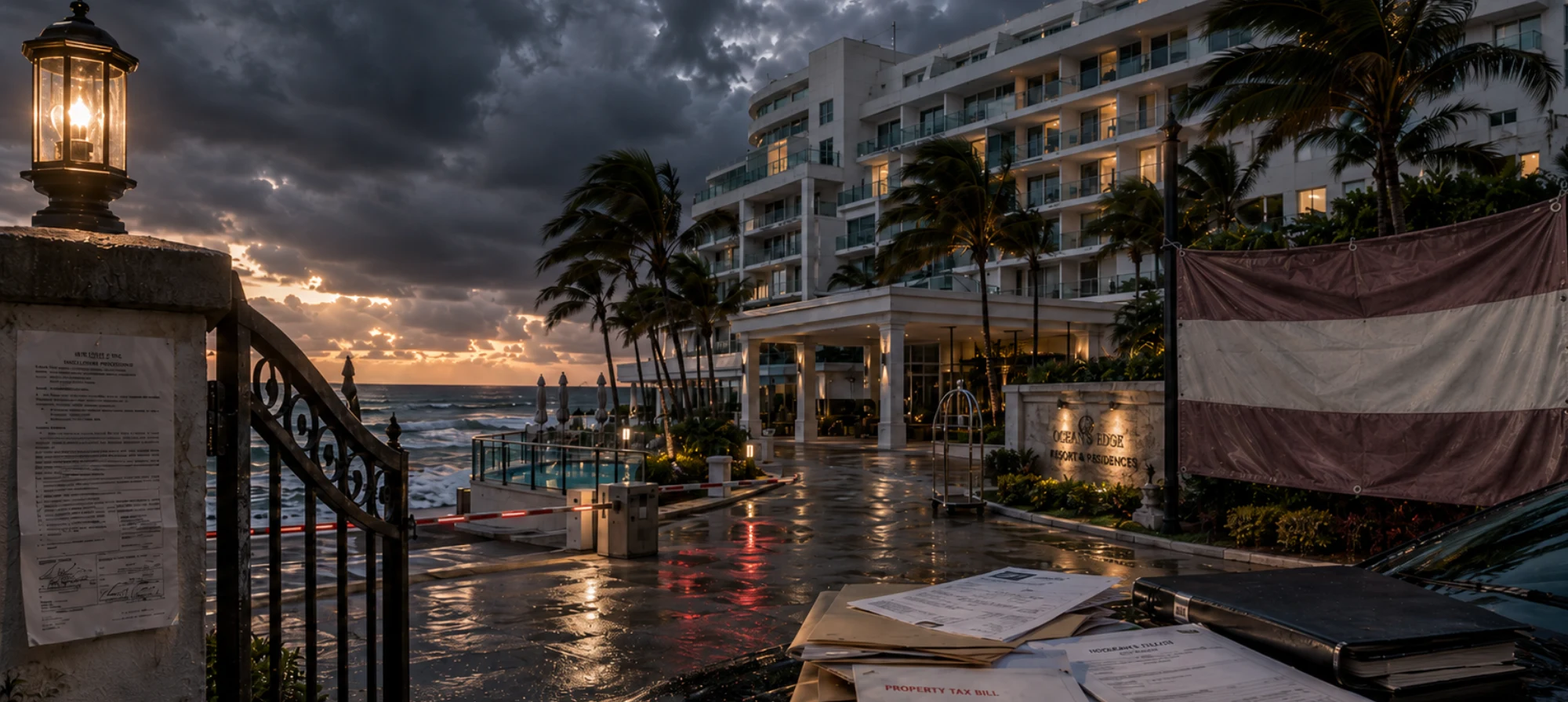
An 81-unit oceanfront hotel went from a $26 million loan to a $40 million foreclosure judgment in just over two years. Here is how it happened, and what every real estate investor needs to understand about the foreclosure process.
- The Hillsboro Beach Resort was scheduled for foreclosure auction on July 16, 2026, after its ownership defaulted on a $26 million loan.
- The final judgment grew to $40 million after accrued interest, fees, and lender advances for unpaid taxes and insurance.
- BH3 Management stated the matter was "amicably resolved" with a confidential settlement before the auction.
The Hillsboro Beach Resort is a perfect example of how quickly a luxury real estate asset can turn into a debt problem. A new oceanfront hotel on prime Hillsboro Mile went from a $26 million loan to a $40 million foreclosure judgment, with taxes, insurance, operator problems, and default fees piling up along the way. According to the South Florida Business Journal, BH3 Management stated: "The matter has been amicably resolved, and the parties are precluded from discussing the terms of the confidential settlement agreement."
But even with a settlement, this case is worth studying. It shows exactly how foreclosure works and what can go wrong when multiple risk factors stack up at the same time.
What happened at the Hillsboro Beach Resort?
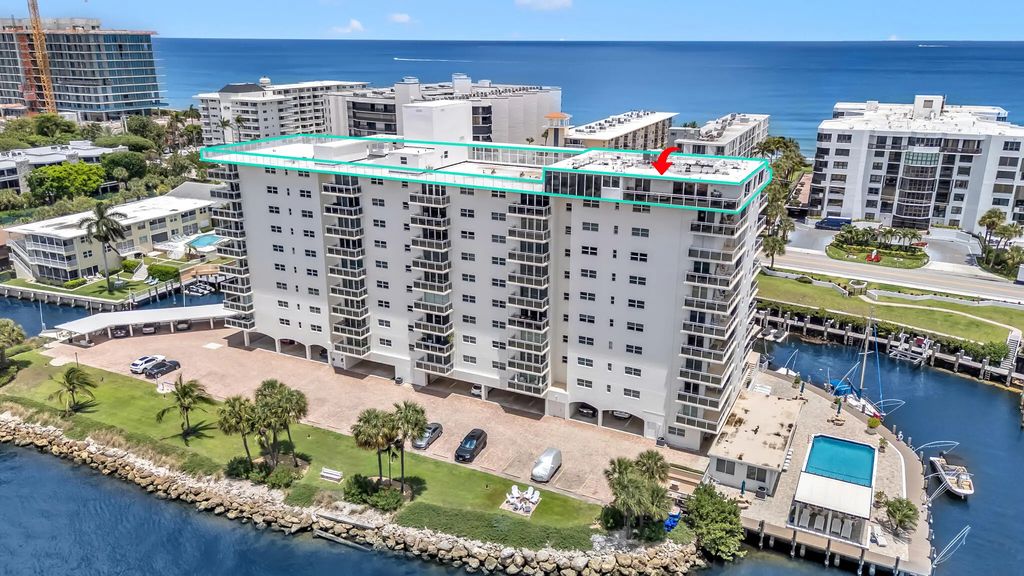
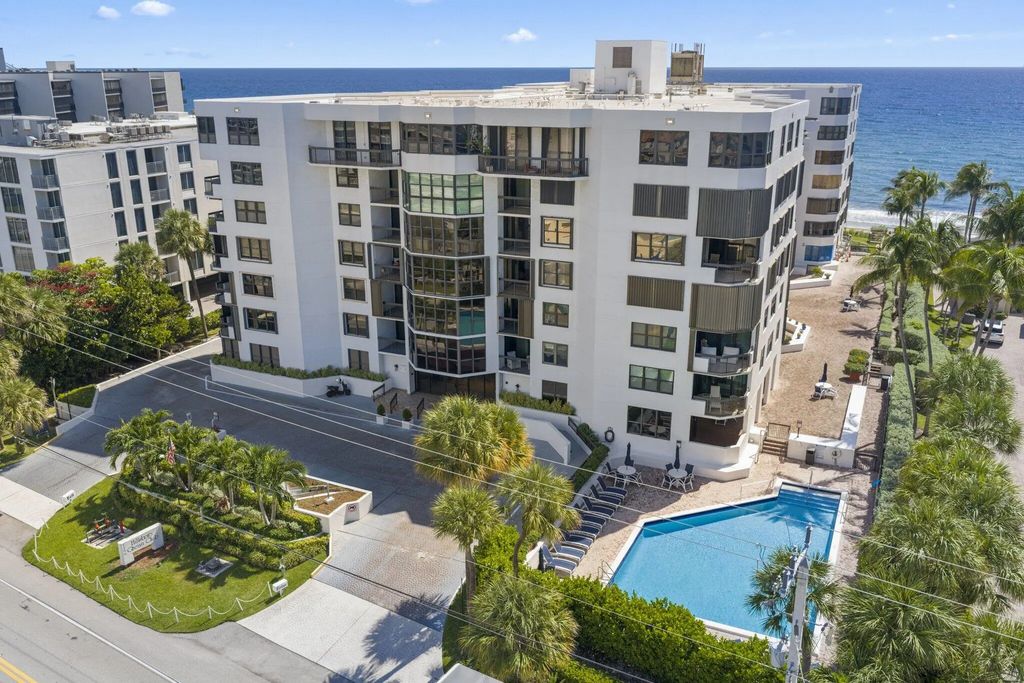
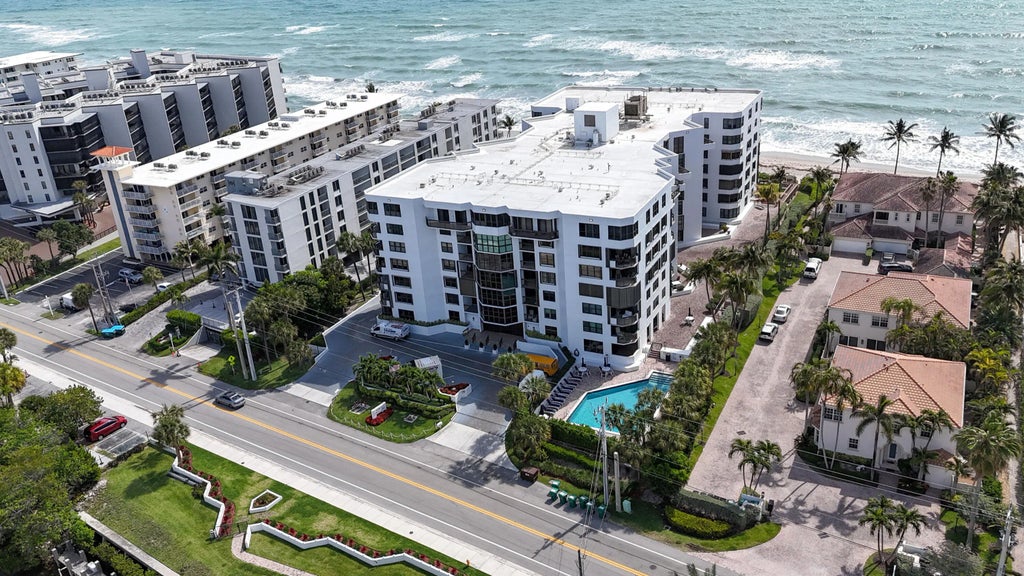
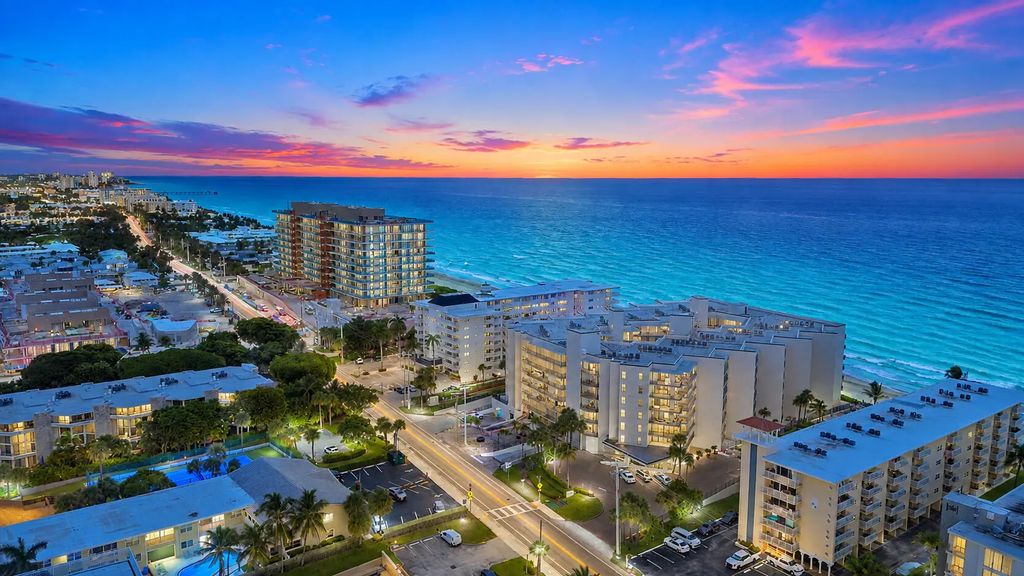
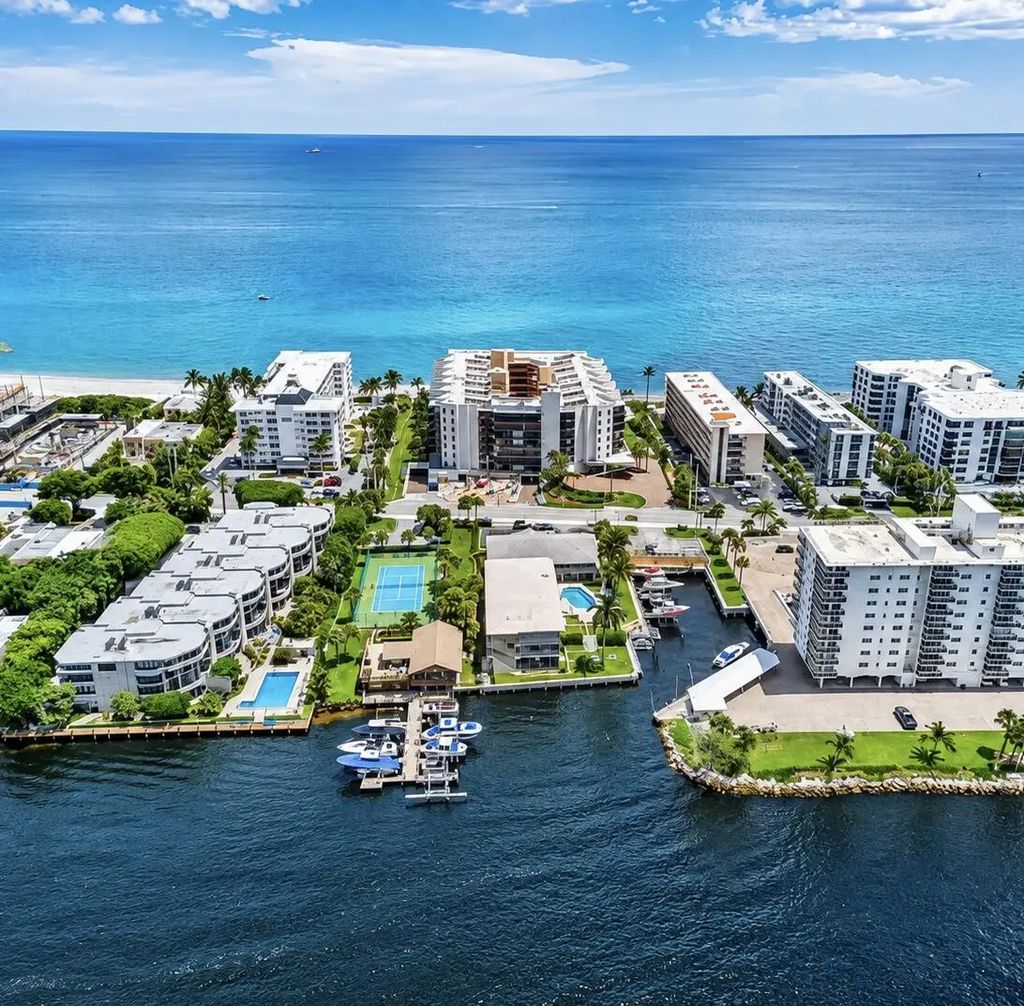
BH3 Management (led by Daniel Lebensohn and Gregory Freedman out of Fort Lauderdale) completed the 81-unit, six-story oceanfront hotel in 2021 at 1159 Hillsboro Mile. The property sits on 1.93 acres in the wealthy barrier island town of Hillsboro Beach, just south of Deerfield Beach and north of Pompano Beach. This is prime real estate, right next to what some call "Billionaire's Row," where single-family homes span from the ocean to the Intracoastal.
In July 2022, Emerald Creek Capital (New York) provided a $26 million mortgage. The hotel was operated by Sonder, a short-term rental startup that leased hotel rooms in bulk and sublet them as branded rentals. Sonder collapsed and filed Chapter 7 bankruptcy in late 2024 after years of financial struggles. When your operator goes under, your revenue stream disappears overnight.
According to court documents cited by The Real Deal, the loan allegedly first went into default in March 2024 when the borrower failed to pay property taxes. Emerald Creek advanced $731,000 to cover the taxes, then another $2.2 million total for taxes and insurance through 2026. The $26 million loan matured in August 2025 without being repaid. Emerald Creek filed a foreclosure lawsuit in February 2026. By April 2026, Judge Martin Bidwill awarded a $40 million final foreclosure judgment.
Important clarification: BH3 Management (Lebensohn and Freedman, Fort Lauderdale) is not the same company as BH Group (Isaac Toledano, Aventura), which has appeared in our coverage of other South Florida projects. Similar names, completely different companies.
What leads to a property going into foreclosure?
Foreclosure does not happen overnight. It is usually the result of multiple problems stacking up at the same time. Here are the most common triggers:
Missed payments: The most obvious one. When a borrower stops making mortgage payments, the lender has grounds to declare default. But it is not always the mortgage payment that triggers default first.
Unpaid property taxes: This is what allegedly triggered the Hillsboro Beach default. Property taxes create a first-lien position, meaning the county gets paid before the mortgage lender. Lenders hate this because if taxes go unpaid long enough, the county can sell a tax lien or even the property itself. So when a borrower misses property taxes, lenders often step in and pay them, then add that amount to what the borrower owes. But paying those taxes does not make the default go away. The lender can still use the missed payment as grounds to accelerate the loan.
Loan maturity without refinancing: Commercial loans often have three- to five-year terms with balloon payments at the end. If you cannot refinance when the loan matures, you are in trouble. The Hillsboro Beach loan matured in August 2025 during a high-interest-rate environment, and the borrowers allegedly could not find a new lender.
Operator or tenant failure: If your income depends on an operator (like a hotel management company) or major tenants, and they go bankrupt, your cash flow disappears. Sonder's collapse allegedly affected properties across the country, including 32 in New Orleans alone.
Insurance and HOA costs: Florida's post-Surfside laws have driven up costs for older buildings with mandatory reserve studies and structural repairs. Aging condos and co-ops facing six- and seven-figure special assessments are especially vulnerable.
The Hillsboro Beach case is not unique. We have tracked similar stories across South Florida. The Mandarin Oriental Boca Raton went from a $130.2 million loan to a bankruptcy auction after years of delays. The Aria in Delray Beach hit foreclosure after its construction loan matured before the project achieved sufficient sales. According to The Real Deal, 13 South Florida development sites went into bankruptcy or foreclosure in 2025, compared to 5 in 2024.
Facing financial pressure on a property? Talk to a real estate agent in Broward County who understands foreclosure alternatives and distressed sales. Reach out to The Mastropieri Group or call (954) 388-7738.
How does a foreclosure auction work in Florida?
Once a lender wins a foreclosure judgment, the property gets scheduled for auction. Here is how it works in Palm Beach County, Broward County, and Miami-Dade County:
Online auctions: The days of showing up at the courthouse steps are mostly over. Most Florida counties now run foreclosure auctions through online platforms. You log in, make sure your deposit is in place, and bid. There are rules, deadlines, and a lot of things that can go wrong if you do not know what you are doing.
Cash only: You cannot finance a foreclosure auction purchase. There is no mortgage, no lender, no underwriting. You show up with cash. The reason is simple: you are not getting a cleared, insured title. You are getting what is called a certificate of title, which basically says, "This is yours, assuming you can clear the title." That is a big assumption.
Sight unseen: You do not get to tour the property before you bid. You do not get to do an inspection. You can drive by and confirm the roof is still on, but that is about it. You are bidding on whatever is there, in whatever condition it is in.
Title risk is on you: When you buy at foreclosure auction, you need to do your own title search work. You need to figure out whether the foreclosing lender is in first position or second position. You need to confirm that all other lienholders were properly notified. If they were not, you could end up owning a property that still has another loan attached to it, and that other lender could foreclose on you next.
We have seen situations where a buyer thought they were getting a $300,000 condo for $20,000, only to discover they were bidding on a second-position lien. The first-position lender still held an $800,000 balance. That is not a deal. That is a disaster.
What are the risks of buying at foreclosure auction?
Foreclosure auctions can create real opportunity, but only for buyers who understand what they are getting into. Here are the risks:
Second-position liens: Not every foreclosure auction is for the primary mortgage. Sometimes you are bidding on a second mortgage, a HELOC, or some other subordinate lien. If you win, you still owe the first-position lender whatever balance remains on their loan. You need to know which lien position is being auctioned before you bid.
Improper notification: Lenders are required to notify all other lienholders when they foreclose. If they miss someone, that lienholder's claim may survive the auction. We have seen deals fall apart because the foreclosing bank failed to notify a second lender. Our attorney could not guarantee we would not have to go through another foreclosure process with that lender. So we walked away.
Property condition: You are buying sight unseen. We have bought properties at auction and discovered the pool was shot, or the roof needed replacing, or there was damage we could not have known about. That is the game. You build the risk into your bid price.
Auctions get canceled: A lot of foreclosure auctions get postponed or canceled at the last minute. The borrower might reach a settlement, like what allegedly happened at the Hillsboro Beach Resort. Or the parties might agree to more time. You can do all the due diligence and still have the deal disappear.
What are the benefits of buying at foreclosure auction?
With all those risks, why do investors still buy at auction? Because the math can work in your favor if you know what you are doing:
Below-market pricing: Foreclosure auctions often start at the judgment amount, which may be less than the property's market value. If there is equity in the property, you can acquire it at a discount.
Less competition: The cash requirement and title risk scare off most buyers. That means fewer bidders and potentially better prices for those who know how to navigate the process.
Speed: Once you win an auction, you own the property. There is no mortgage contingency, no inspection period, no negotiation. You close and take possession.
Value-add opportunities: Properties that go to foreclosure often have deferred maintenance or operational problems. If you can fix those issues, you can reposition the asset and capture the upside.
As Larry Mastropieri explained on the Discover South Florida Podcast: "We see clients come to us thinking they did something cool by buying at foreclosure auction. They paid $20,000 for a condo they think is worth $300,000, and then they find out there is an $800,000 balance because they were bidding on a second-position foreclosure. They had no idea what they were actually buying."
Foreclosure auctions are not for beginners. But for sophisticated investors who understand title risk, cash requirements, and property condition, they can be a legitimate source of deal flow.
Watch the Full Discussion: This Segment | Full Episode | Last Week's Recap
Frequently Asked Questions about Foreclosure Auctions in Florida
What happened to the Hillsboro Beach Resort?
The 81-unit oceanfront hotel at 1159 Hillsboro Mile was scheduled for foreclosure auction on July 16, 2026, after its ownership defaulted on a $26 million loan from Emerald Creek Capital. The final judgment grew to $40 million. According to the South Florida Business Journal, BH3 Management stated the matter was "amicably resolved" with a confidential settlement.
What is a foreclosure in real estate?
A foreclosure is a legal process where a lender takes control of a property after the borrower defaults on their loan. Defaults can be triggered by missed mortgage payments, unpaid property taxes, or failure to maintain insurance. Once a lender wins a foreclosure judgment, the property is typically sold at auction to recover the debt. The borrower loses ownership, and any remaining debt may still be owed depending on the loan terms.
What triggers a commercial real estate foreclosure?
Common triggers include missed mortgage payments, unpaid property taxes, loan maturity without refinancing, operator or tenant bankruptcy, and rising insurance or HOA costs. In the Hillsboro Beach case, the default allegedly started with unpaid property taxes, then compounded when the operator (Sonder) went bankrupt and the loan matured without being refinanced.
What is the difference between a first-position and second-position lien?
A first-position lien has priority over all other claims on the property. A second-position lien (like a HELOC or junior mortgage) gets paid only after the first-position lender is satisfied. If you bid on a second-position foreclosure, you may still owe the first-position lender their full balance. This is one of the biggest risks at foreclosure auctions.
Can you inspect a property before a foreclosure auction?
No. Foreclosure auction properties are sold sight unseen. You can drive by and confirm the building exists, but you cannot tour the interior, conduct an inspection, or verify the condition of systems and finishes. Experienced auction buyers build this uncertainty into their bid prices.
Local help for buyers and investors in Hillsboro Beach
If you are buying, selling, or investing in Hillsboro Beach, Pompano Beach, or Deerfield Beach, understanding how foreclosures and distressed sales affect property values matters. Reach out to The Mastropieri Group, Realtors®.
For practical, hands-on support across Broward County, call (954) 388-7738.
Posted by Larry Mastropieri







Enjoy this blog post? Click here to subscribe for updates

Leave A Comment